
Greetings! I'm Aneesh Sreedharan, CEO of 2Hats Logic Solutions. At 2Hats Logic Solutions, we are dedicated to providing technical expertise and resolving your concerns in the world of technology. Our blog page serves as a resource where we share insights and experiences, offering valuable perspectives on your queries.

Everyone tells you to sell everywhere. More channels, more revenue, more growth. Simple, right?
What they don’t tell you is that most brands that rush into multichannel e-commerce end up with more complexity, more errors, and thinner margins.
Adding Amazon didn’t double your revenue. It doubled your workload. Listing on eBay didn’t expand your reach. It created another inventory headache. And that social commerce experiment? It mostly generated support tickets from a channel your team barely monitors.
Multichannel selling isn’t broken. But the way most brands do it is.
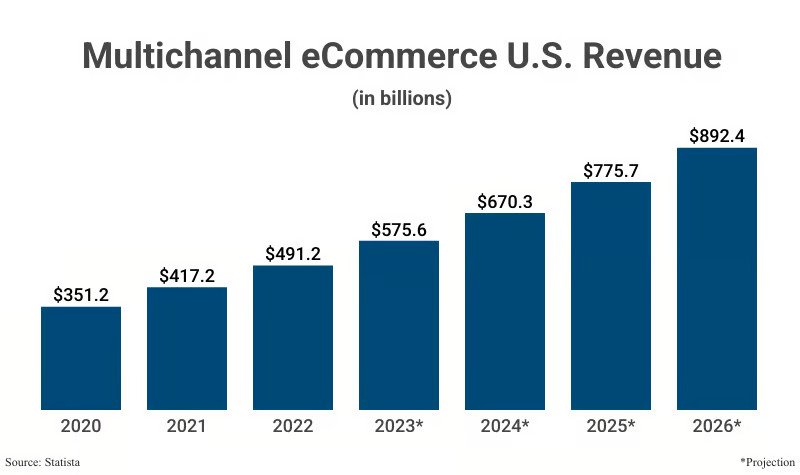
The numbers don’t lie: multichannel sales crossed $575 billion in 2023, and 63% of retailers now sell on three or more platforms. The opportunity is enormous. But the brands that actually capture it aren’t the ones adding channels the fastest. They’re the ones with the right foundation underneath.
This guide breaks down how Shopware Multichannel gives brands that foundation, connecting 1,300+ marketplaces through a single multichannel e-commerce platform, and how to build a strategy that grows your business without breaking your operations.
What Is Multichannel E-commerce?
“Multichannel e-commerce” simply means selling your products through more than one sales channel. Instead of putting all your eggs in one Amazon-shaped basket, you spread across your own website, marketplaces, mobile apps, social media, and even offline touchpoints.
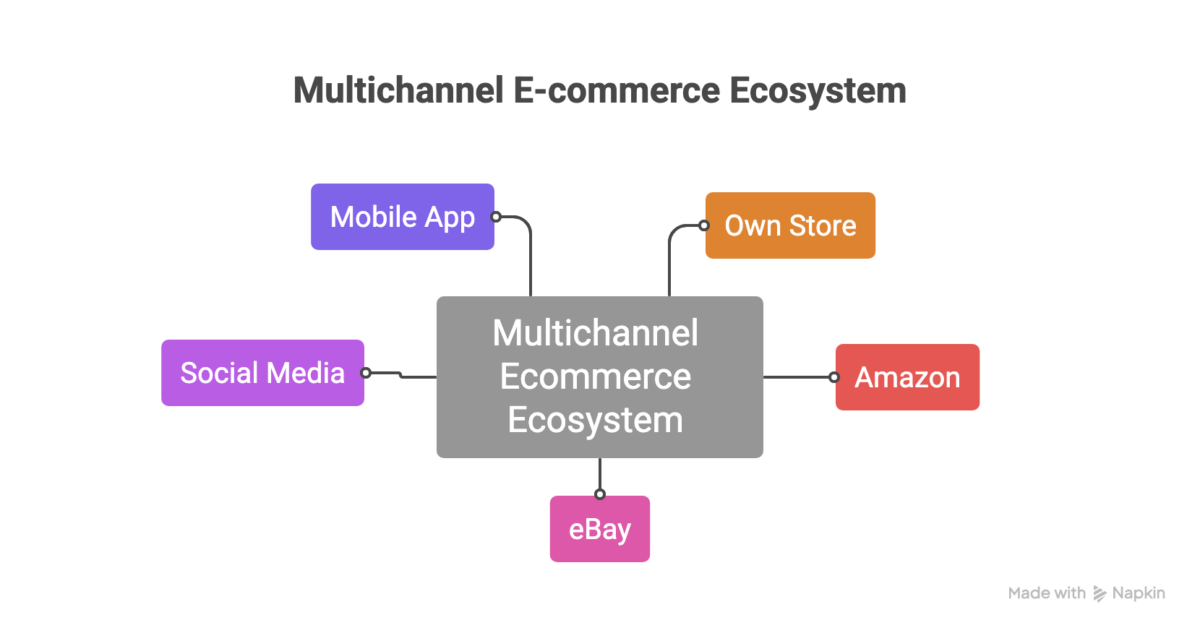
A solid multichannel e-commerce software setup connects all of these channels into one system. So instead of logging into five dashboards every morning, you manage everything from a single control center.
Why does this matter? Because reach equals revenue.
The more places your products show up, the more chances customers have to discover and buy them. Global e-commerce revenue is projected to hit $4.96 trillion by 2030 (according to Statista), and a huge chunk of that is flowing through multi-channel e-commerce setups.
But multichannel isn’t just about being everywhere. It also opens the door to smarter multichannel marketing, promoting the right products to the right audiences on the right platforms, instead of blasting one campaign across the board.
Why Multichannel Selling Matters for E-commerce Brands
Here’s the uncomfortable truth: relying on a single sales channel in 2026 is a business risk.
One algorithm change. One fee increase. One account suspension. And suddenly, your entire revenue stream is in trouble.
Multichannel selling fixes that by spreading your sales across multiple platforms. You’re not dependent on Amazon’s mood swings or Shopify’s pricing updates. If one channel dips, the others keep you afloat.
And the numbers back this up. Multichannel e-commerce sales hit $575.6 billion in 2023; that’s 47% of all e-commerce sales. By 2025, that number was projected to reach $775.7 billion. The market is moving fast.
But here’s the thing most brands get wrong: multichannel selling isn’t just about adding channels. It’s about doing it efficiently.
Key benefits of multichannel selling
- Wider reach across marketplaces, branded stores, and social commerce: your products show up where customers actually shop.
- Better resilience: if one channel underperforms or suspends your account, your business doesn’t collapse overnight.
- Stronger conversion opportunities: customers who see your brand on multiple platforms are more likely to trust and buy from you.
- Smarter marketing: multichannel marketing campaigns can be tailored by platform, audience, and buying stage for better ROI.
- Higher customer lifetime value: multichannel customers have 30% greater lifetime value compared to single-channel buyers.
Why Shopware Multichannel Is a Strong Choice
If you’re evaluating multichannel e-commerce platform options, Shopware deserves a serious look, especially if you’re selling in European markets or scaling internationally.
Shopware Multichannel (specifically through its Multichannel Connect app, powered by ChannelEngine) connects your Shopware 6 store to over 1,300 global marketplaces. That includes heavy hitters like Amazon, eBay, Zalando, Otto, Kaufland, and Walmart.
Everything runs through a unified dashboard. Product listings, inventory levels, pricing, and orders are all managed from one place. No more toggling between fifteen tabs at 7 AM.
For brands searching for a multi-channel integration platform or a flexible multichannel software e-commerce solution, Shopware offers a few standout capabilities:
Shopware Multichannel: Feature breakdown
| Capability | What Shopware Does | Why It Matters |
| Marketplace integration | Connects to 1,300+ global marketplaces via ChannelEngine | One integration instead of building dozens of custom connections |
| Centralized dashboard | Manage listings, inventory, pricing, and orders from one admin panel | Eliminates the five-login morning routine |
| Real-time inventory sync | Automated stock updates across all connected channels | Prevents overselling: the #1 multichannel killer |
| Dynamic repricing | AI-powered competitive pricing that adjusts in real time | Stay competitive without manual price monitoring |
| AI product bundling | Automatically creates product combinations | Increases average order value across channels |
| FBA integration | Syncs with Fulfilled by Amazon for streamlined shipping | Handles Amazon logistics without breaking your central system |
| API-first architecture | Supports headless commerce and custom storefronts | Future-proof for channels that don’t exist yet |
Whether you’re a D2C brand expanding into marketplaces or a retailer adding regional storefronts, Shopware works as a practical multi-channel e-commerce platform that grows with your business.
Want to see how this works for your business?
Tip: Before adding new sales channels, stabilize your existing ones first. Get your inventory sync, product data, and fulfillment workflows dialed in on two or three channels before scaling to five or ten. Adding channels to a broken foundation just multiplies the chaos.
How Shopware Handles Multichannel E-commerce Inventory Management
Inventory is the thing that keeps multichannel sellers up at night. And for good reason.
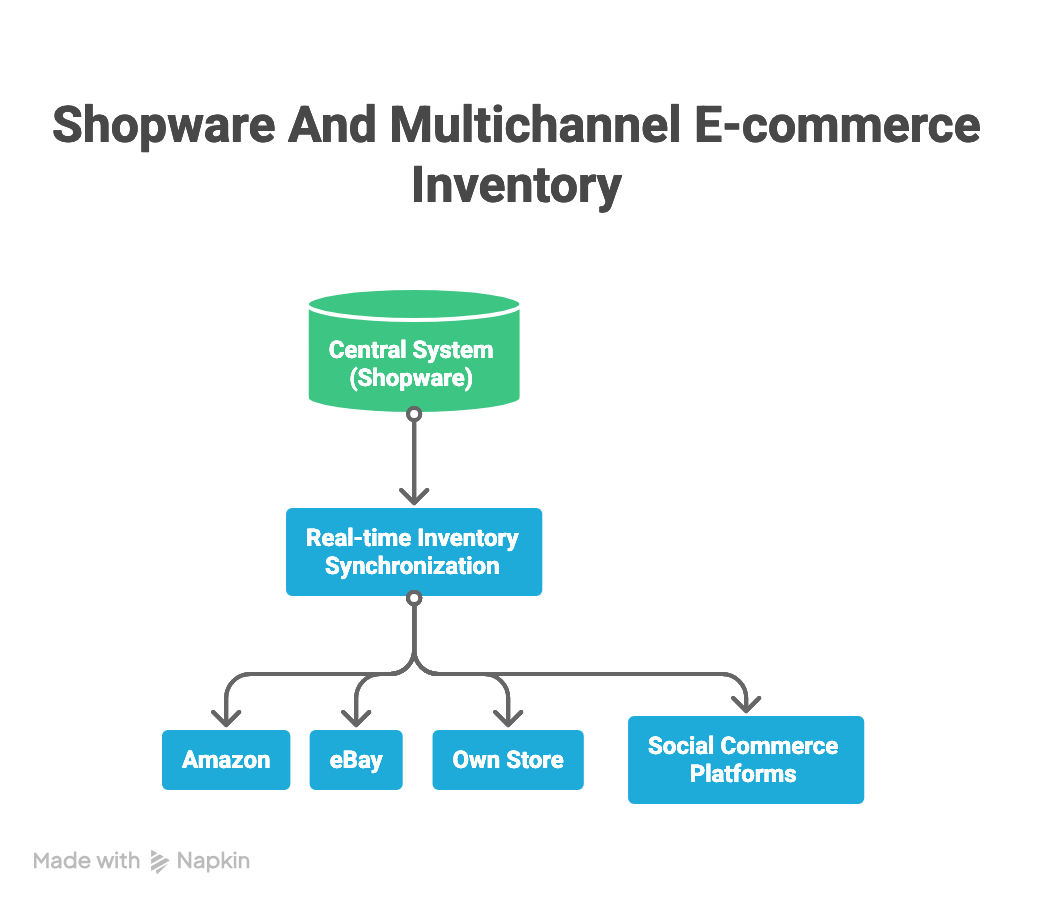
Multi-channel e-commerce inventory management is the backbone of any successful multichannel operation. Get it right, and you run a smooth, profitable machine. Get it wrong, and you’re dealing with oversold orders, angry customers, and marketplace suspensions.
Research by IHL Group estimates $1.77 trillion in global revenue loss from inventory distortion, $1.2 trillion from out-of-stocks alone. Brands that move from manual tracking to real-time sync typically reduce oversell incidents by 90–95%.
How Shopware solves inventory challenges
| Challenge | Without Shopware | With Shopware Multichannel |
| Overselling across channels | Manual updates lag behind sales, and double-sells happen constantly | Real-time sync updates all channels within minutes of a sale |
| Stock visibility | Separate dashboards per channel, no unified view | Single dashboard shows stock across all 1,300+ connected marketplaces |
| Returns and restocking | Returned items sit in limbo, not re-added to available stock | Automated returns flow feeds items back into inventory |
| Marketplace-specific rules | Each platform has different safety stock and listing requirements | ChannelEngine handles marketplace-specific data mapping automatically |
| Warehouse coordination | Manual allocation across fulfillment centers | Centralized stock allocation with FBA and multi-warehouse support |
A platform like Shopware, combined with a strong multi channel e-commerce software connector like ChannelEngine, automates the heavy lifting. Inventory updates flow in real time, orders sync back to your central system, and you avoid the manual entry errors that cause the majority of inventory headaches.
Managing Amazon and eBay Inventory with Shopware
When it comes to multi-channel inventory management, things get complicated fast.
Amazon and eBay aren’t just different marketplaces. They’re entirely different ecosystems, different rules, listing formats, fulfillment requirements, and performance metrics.
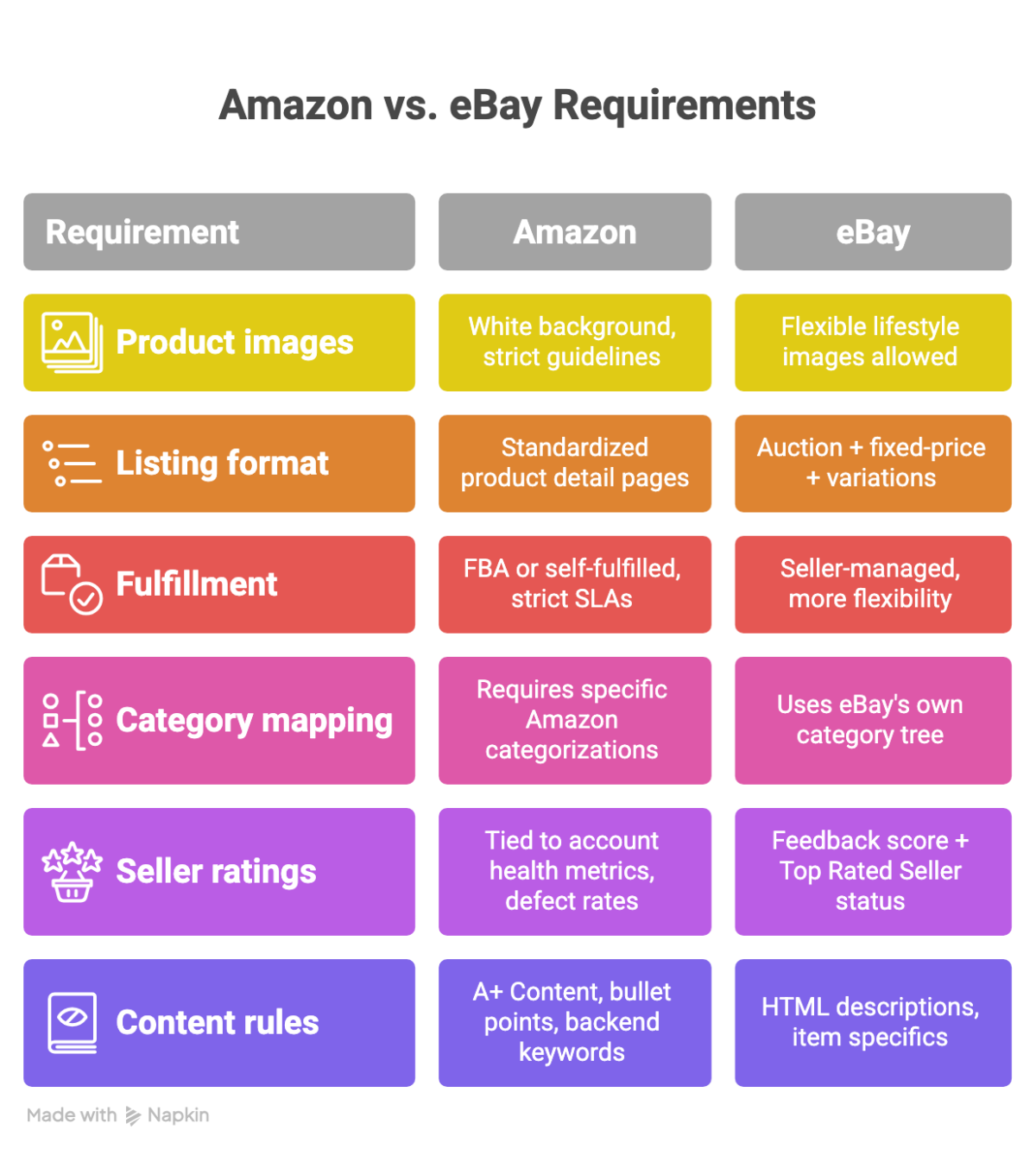
If you’re using Fulfilled by Amazon (FBA), your inventory is physically in Amazon’s warehouses, which adds another layer of complexity when you’re also selling on eBay and your own Shopware store.
How Shopware bridges the gap
Shopware’s multi-channel integration platform (via ChannelEngine) acts as the bridge between these marketplaces and your central system. Here’s what it handles:
- Real-time stock sync: prevents overselling when the same SKU is listed across Amazon, eBay, and your store.
- Automated order routing: routes orders to the right warehouse or fulfillment center based on location and stock.
- Marketplace-specific data mapping: ensures listings meet Amazon’s and eBay’s unique content and category requirements automatically.
- FBA integration: syncs FBA inventory with your other channels so stock counts stay accurate everywhere.
- Returns processing: handles returns from different marketplaces with proper restocking and refund workflows.
If you’re running a serious multichannel operation, Amazon and eBay inventory management can’t be an afterthought. It needs to be built into your platform from day one, and Shopware’s architecture is designed exactly for that.
Multichannel Marketing and Sales Performance in Shopware
You can have perfect inventory sync and a beautifully connected tech stack, but if your multichannel marketing is weak, you’re just managing channels instead of growing them.
Strong multichannel marketing means promoting the right product to the right audience on the right channel at the right time. Your Amazon shopper and your Instagram browser have completely different buying behaviors, and your campaigns should reflect that.
Shopware’s built-in marketing tools for multichannel
Shopware doesn’t just connect channels, it gives you tools to market across them:
| Tool | What It Does | Multichannel Impact |
| Rule Builder | Creates conditional business logic (pricing, promotions, content) | Set channel-specific pricing rules, VIP discounts, or regional offers |
| Flow Builder | Automates workflows triggered by events | Send channel-specific confirmation emails, trigger restock alerts |
| Shopping Experiences | Visual CMS for custom storefronts | Create unique landing pages per market or audience segment |
| Dynamic Product Groups | Auto-populates product collections based on rules | Show trending products by channel, category, or customer behavior |
| Customer Segmentation | Groups customers by behavior, channel, or purchase history | Tailor campaigns to Amazon buyers vs. direct-store customers |
Where multichannel marketing helps most
- Channel-specific promotions: run Amazon Lightning Deals, eBay promotions, and social flash sales independently, each optimized for that platform’s audience.
- Performance tracking by channel: know exactly which channels drive the most revenue, the highest margins, and the best customer lifetime value.
- Coordinated campaigns: launch product drops across all channels simultaneously, with consistent messaging and inventory backing.
- Improved ROAS: channel-level insights let you shift ad spend toward platforms that actually convert.
Tip: Start with Shopware’s Rule Builder and Flow Builder before investing in a separate marketing hub. These tools can handle channel-specific promotions, automated email triggers, and customer segmentation, often enough for the first stage of multichannel growth. Layer in a dedicated marketing hub only when you outgrow what’s built in.
Multichannel Inbox and Customer Communication in Shopware
Here’s a detail that’s easy to overlook until it becomes a disaster: customer communication.
When you sell on three, five, or ten channels, messages pile up fast. Amazon shipping questions. eBay return requests. Social media buyers asking about restock. Your support team is juggling separate inboxes for each platform.
A multichannel inbox solves this by pulling all customer messages into one place. Response times drop. Nothing falls through the cracks. Customers get a consistent experience regardless of where they bought.
What a strong multichannel inbox should handle
| Capability | Why It Matters |
| Unified message view | All marketplace, email, social, and live chat messages in one dashboard |
| Automatic routing | Messages go to the right team member based on channel, issue type, or customer history |
| Customer context | Order history, previous conversations, and purchase channel visible at a glance |
| Response templates | Consistent templates that adapt to each platform’s tone and format |
While Shopware’s core platform focuses on commerce operations, its ecosystem includes integrations with customer support tools that create a unified communication layer. As your multichannel e-commerce platform expands, connecting your support stack to Shopware ensures your team isn’t blind to what’s happening across channels.
The brands that nail multichannel communication build trust faster and retain customers longer. It’s not optional anymore, it’s a competitive advantage.
Why Shopware Works Well for Multi-Channel E-Commerce
Picking the best multi-channel ecommerce platform isn’t about the longest feature list. It’s about finding a system that fits how your business actually works, and how it needs to grow.
Platform comparison: Shopware vs. generic multichannel tools
| Criteria | Generic Multi-Channel Tools | Shopware Multichannel |
| Marketplace connections | 50-200 marketplaces | 1,300+ via ChannelEngine |
| Inventory sync | Batch updates (hourly/daily) | Real-time sync |
| Commerce engine included | No, requires a separate e-commerce platform | Yes, full e-commerce platform built in |
| Headless / API-first | Limited or add-on | Native API-first architecture |
| European marketplace coverage | Basic (Amazon, eBay) | Deep (Zalando, Otto, Kaufland, Bol, + regional players) |
| B2B + B2C support | Usually B2C only | Both, with role-based pricing and catalogs |
| Marketing tools | External integrations required | Built-in Rule Builder, Flow Builder, Shopping Experiences |
| Scalability | Depends on the underlying platform | Enterprise-grade, open source, extensible |
Features to prioritize
International scalability: multi-currency, multi-language, and multi-warehouse support.
Centralized product and inventory management: one source of truth for all your product data, pricing, and stock levels.
Marketplace integration depth: robust integration that handles category mapping, content requirements, and fulfillment rules per marketplace.
Flexible channel setup: add new channels (social commerce, regional marketplaces, B2B portals) without rebuilding infrastructure.
Order automation: automatic order routing, status updates, and fulfillment tracking.
The Gap: What Most Platform Evaluations Miss
Most brands evaluate platforms based on what channels they support today. But the marketplaces that matter in 2027 might not even be on your radar yet.
What to ask instead:
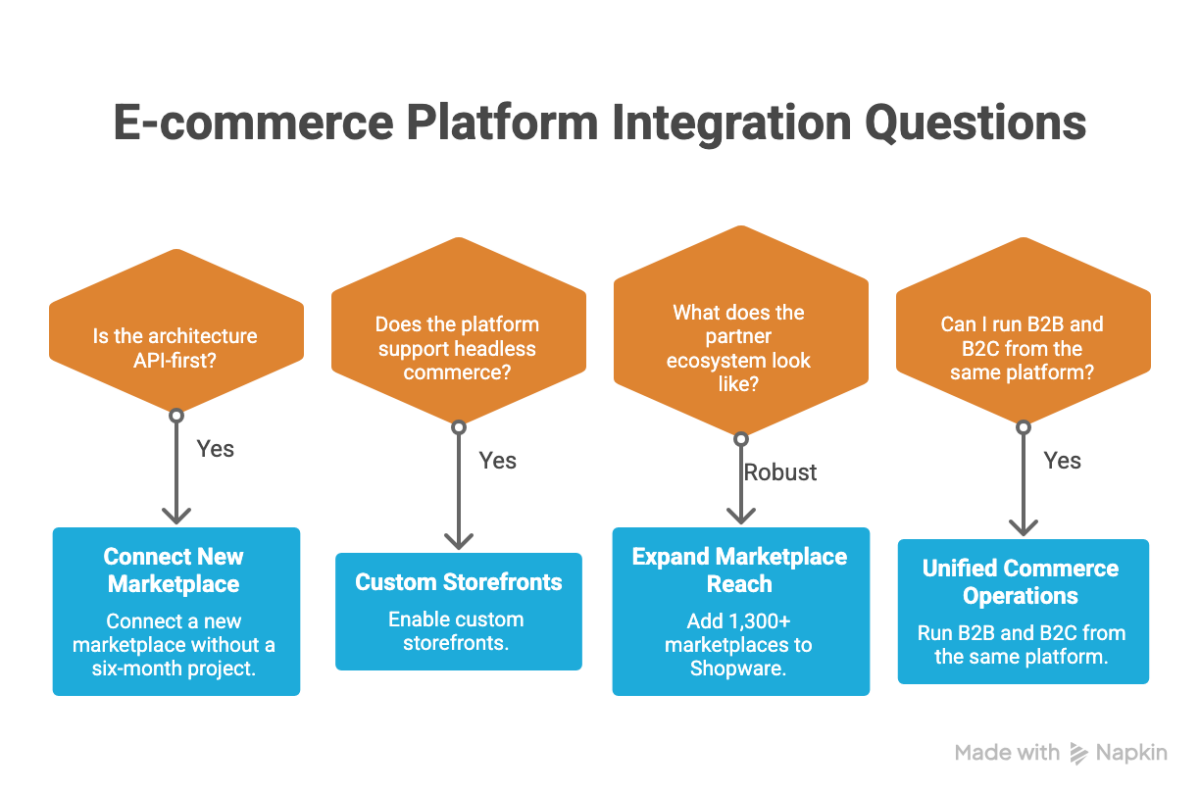
- Is the architecture API-first? Can I connect a new marketplace without a six-month project?
- Does the platform support headless commerce for custom storefronts?
- What does the partner ecosystem look like? (ChannelEngine alone adds 1,300+ marketplaces to Shopware.)
- Can I run B2B and B2C from the same platform?
The best platform isn’t the one with the most features today. It’s the one that won’t force a replatform in 18 months.
Tip: Don’t wait until you have ten channels to set up a multichannel inbox. Even at two or three channels, a unified support view saves hours per week and catches issues before they become marketplace complaints. Connect your support tool to Shopware early so customer context flows automatically.
Shopware as Multi-Channel Selling Software for Businesses
Every new channel you add comes with its own product data requirements, pricing rules, order workflows, and customer communication expectations. Without the right software, each channel becomes another spreadsheet, another login, another set of manual updates.
Three workflows Shopware automates
| Workflow | Manual Approach | With Shopware |
| Product updates | Change price/description on each channel separately | Change once in Shopware → rolls out across all channels automatically |
| Stock syncing | Scheduled batch uploads every few hours | Real-time sync across all connected marketplaces |
| Order coordination | Log in to each marketplace to check and process orders | All orders funnel into Shopware for unified fulfillment and tracking |
For many growing companies, Shopware doubles as the best multi-channel selling platform, combining operational control with the flexibility to add new channels as the business scales. It’s not just a connector; it’s a full commerce engine with multichannel capabilities built in.
Tired of overselling and stock mismatches?
How to Build a Better Multichannel E-commerce Strategy with Shopware
Adding channels without a strategy is like opening new stores without hiring staff. You’ll spread thin, operations will suffer, and the whole thing collapses.
Here’s a practical, Shopware-specific roadmap for building a multichannel strategy that actually works.
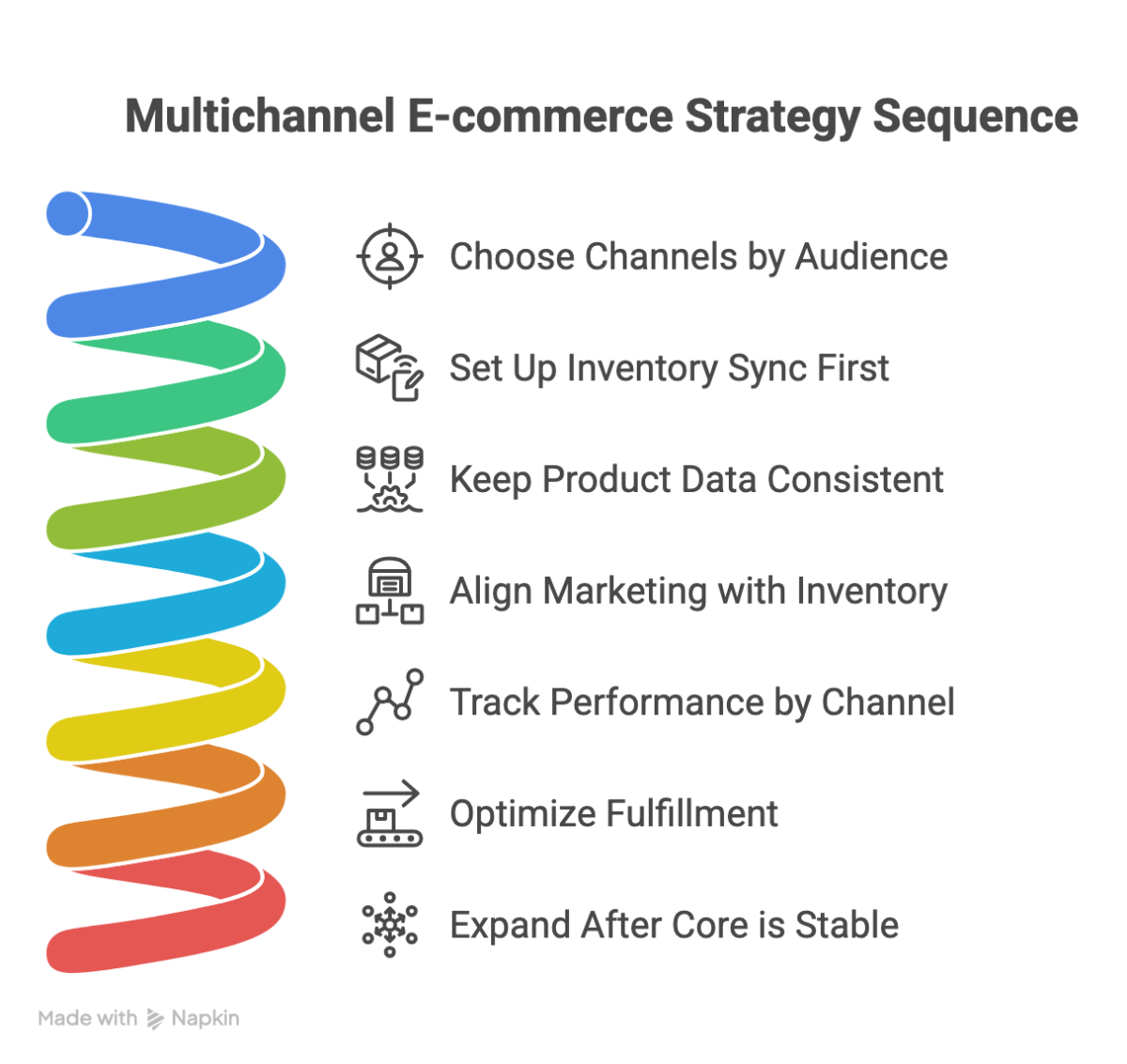
The 7-step Shopware multichannel roadmap
| Step | What to Do | Shopware Feature That Helps |
| 1. Choose channels by audience | Don’t add TikTok for B2B industrial parts. Go where your customers shop. | Sales Channel configuration lets you set up and test channels independently |
| 2. Set up inventory sync first | Get multi-channel ecommerce inventory management bulletproof before listing anywhere new. | Real-time sync via ChannelEngine prevents overselling from day one |
| 3. Keep product data consistent | Core data lives in one place. Channel-specific adjustments via rules, not manual edits. | Shopware PIM + ChannelEngine’s data mapping handles channel-specific requirements |
| 4. Align marketing with inventory | Don’t promote products that are out of stock on a specific channel. | Rule Builder + Flow Builder connects promotions to real-time availability |
| 5. Track performance by channel | Revenue, margins, acquisition cost, and CLV, per channel. Shift resources accordingly. | Built-in analytics + ChannelEngine reporting per marketplace |
| 6. Optimize fulfillment | Consider hybrid strategies, FBA for Amazon, 3PL for your store, regional warehouses for Europe. | FBA integration + multi-warehouse support in Shopware |
| 7. Expand after core is stable | Stabilize, optimize, then expand. Resist the urge to add five channels at once. | Shopware’s phased Sales Channel setup makes controlled expansion easy |
Conclusion
Multichannel e-commerce isn’t a growth hack or a buzzword. It’s how modern commerce works. The brands that thrive in 2026 and beyond sell strategically across the right channels, keep operations tight, and scale with discipline.
Whether you’re exploring multi channel ecommerce platform, the key is choosing a foundation that handles complexity without creating more of it.
Ready to build your multichannel strategy the right way? The team at 2HatsLogic has helped brands across Europe and the GCC region launch, integrate, and scale multichannel ecommerce operations on Shopware and beyond. Talk to our team.
FAQ
What is Shopware Multichannel Connect?
Shopware Multichannel Connect, powered by ChannelEngine, enables seamless integration of your Shopware 6 store with over 1,300 marketplaces worldwide, including Amazon, Zalando, and Otto.
Which marketplaces are supported by Shopware Multichannel Connect?
The platform connects you to over 1,300 marketplaces worldwide, including high-traffic platforms like Amazon, Zalando, Kaufland, Otto, and Walmart, helping you expand your business globally.
How much does it cost to set up Shopware Multichannel Connect?
The cost of implementing Shopware Multichannel Connect depends on factors such as your SKU volume, the number of sales channels, and any required customizations. Shopware offers flexible pricing tailored to your business needs. Please note that Shopware Multichannel Connect is a standalone product and is not included in standard plans, so a separate license is required.
Which channels should I start with?
This largely depends on your target audience. For most merchants, starting with a combination of their own online store and a high-reach marketplace like Amazon or eBay is a practical approach. If you offer visually driven products, social commerce platforms such as Instagram can serve as a strong complementary channel.
Table of contents
- What Is Multichannel E-commerce?
- Why Multichannel Selling Matters for E-commerce Brands
- Why Shopware Multichannel Is a Strong Choice
- Why Shopware Works Well for Multi-Channel E-Commerce
- Shopware as Multi-Channel Selling Software for Businesses
- How to Build a Better Multichannel E-commerce Strategy with Shopware
- Conclusion


Related Articles