Greetings! I'm Aneesh Sreedharan, CEO of 2Hats Logic Solutions. At 2Hats Logic Solutions, we are dedicated to providing technical expertise and resolving your concerns in the world of technology. Our blog page serves as a resource where we share insights and experiences, offering valuable perspectives on your queries.
Quick Summary:
Shopify’s vape ban is now in effect in the U.S., preventing merchants from selling vape products on the platform. This article explains why Shopify introduced the restriction, how it affects merchants, and the options available for businesses deciding whether to remain on Shopify or migrate to a more flexible ecommerce platform. It also highlights key considerations for regulated industries navigating changing platform policies.
Shopify’s restrictions on vape products have now taken effect, creating a major shift for merchants selling regulated nicotine and vaping items. Reuters reported that Shopify moved to ban all vapes in the U.S. after pressure from state attorneys general, and the deadline has passed.
The change is significant because it went beyond a narrow enforcement action. According to Reuters, the U.S. ban applied to all vape products, including some that may have had FDA authorization.
Why did Shopify Take this Step?
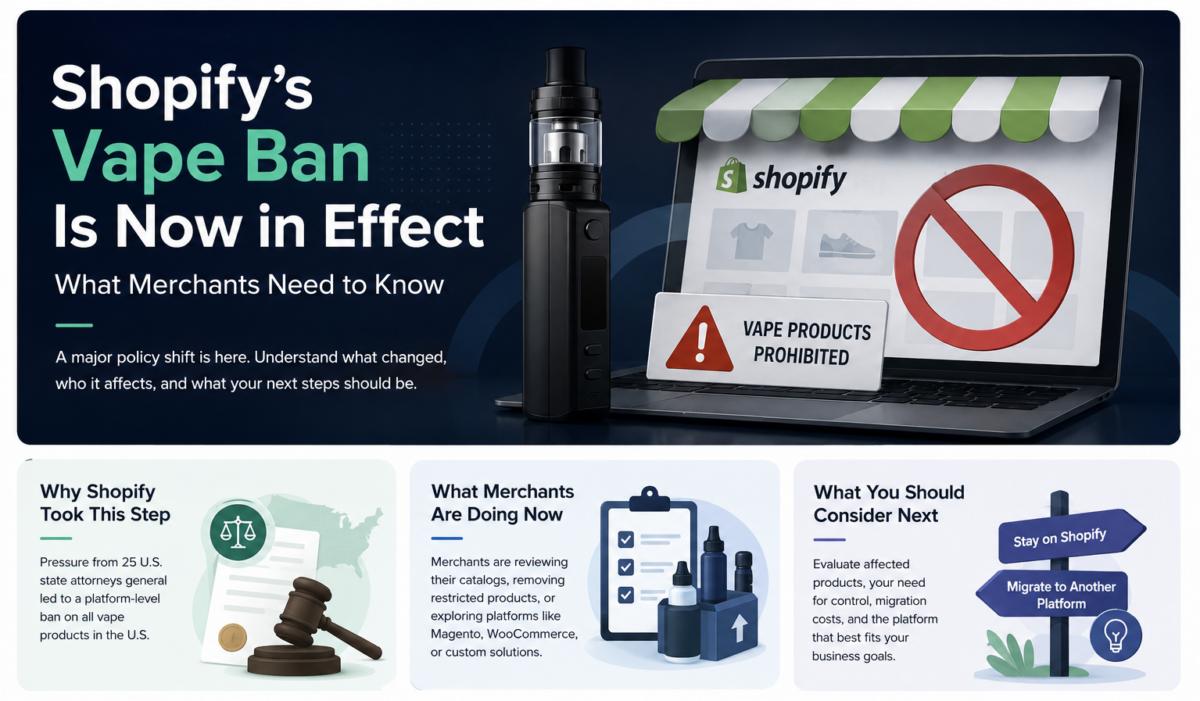
The policy change followed pressure from a coalition of 25 U.S. state attorneys general, who urged Shopify to stop hosting vape-related businesses they said were selling illegal products. The move reflects a broader crackdown on online sales of e-cigarettes and vaping products, especially in categories that regulators see as high risk
For merchants, this meant the issue was not only about product labeling or shipping rules. It became a platform-level restriction that affected what could remain visible and sellable on Shopify.
What are Affected Merchants Doing Now?
Affected merchants are now reviewing their product mix and deciding whether to stay on Shopify with only allowed items or move part of their business to another platform. Some are removing restricted products and continuing with the rest of their catalog, while others are considering Magento, WooCommerce, Shopware, or custom commerce setups
For many businesses, this has become a platform strategy decision rather than just a compliance issue. The key question is whether Shopify still fits the business model after the restriction
For brands exploring their next move, 2Hats Logic helps assess platform options, plan migrations, and build scalable e-commerce experiences that fit their business model.
What Merchants Should Consider Next?
The right response depends on the business model, product category, and long-term growth plans. Some merchants may decide to stay on Shopify and focus on allowed products. Others may choose a more flexible platform like Magento or WooCommerce if they need more control.
Before making a switch, merchants should review:
- Which products are affected?
- Whether the remaining catalog can stay on Shopify.
- How much operational control do they need?
- Whether migration costs make sense for the long term.
- Which platform best matches their product and business needs?
That makes planning more important than reacting.
Considering your next e-commerce platform?
Why this Matters Beyond Vape Products
Although this update is specific to vape products, the broader lesson applies to many regulated or sensitive categories. Merchants in wellness, supplements, adult products, CBD-adjacent categories, and similar verticals should pay close attention to platform rules.
When a platform changes its policy, the impact can go beyond one product line. It can affect operations, catalog planning, and future growth choices.
Conclusion
Shopify’s vape ban is a reminder that platform rules can change quickly in regulated categories. For merchants, the challenge is not only staying compliant but also choosing a setup that supports business continuity.
Some brands will stay and adapt. Others may decide it is time to migrate or rethink their commerce stack. The important part is to evaluate the options early and choose a path that supports the business in the long term
FAQ
Why did Shopify ban vape products?
Shopify made the change after pressure from U.S. state attorneys general and concerns about illegal online vape sales. The move was part of a broader crackdown on vaping products
Are all vape products affected?
Reuters reported that the U.S. ban applied to all vape products, including some that may have had FDA authorization. Merchants should not assume that legal status alone makes a product eligible on Shopify.
What are affected merchants doing now?
Merchants are deciding whether to remove restricted products and stay on Shopify or move part of their business to another platform. Some are also evaluating Magento, WooCommerce, or custom solutions
Should merchants move to Magento or WooCommerce?
That depends on their product category, operational needs, and long-term goals. These platforms may offer more flexibility, but the right choice depends on the business.
Can a store still sell other products on Shopify?
Yes. Stores can still sell products that fit Shopify’s merchant guidelines. The restriction applies to prohibited product categories, not necessarily the entire store.

Related Articles