
Greetings! I'm Aneesh Sreedharan, CEO of 2Hats Logic Solutions. At 2Hats Logic Solutions, we are dedicated to providing technical expertise and resolving your concerns in the world of technology. Our blog page serves as a resource where we share insights and experiences, offering valuable perspectives on your queries.

A single overlooked clause in a business contract can cost companies millions. From missed renewal deadlines to unfavorable terms buried in fine print, contract mistakes create legal exposure, financial liability, and operational disruptions that ripple across entire organizations.
Consider this: studies show that poor contract management costs businesses up to 9% of their annual revenue. Manual contract review processes, prone to human error and inconsistency, leave companies vulnerable to compliance violations, missed obligations, and unfavorable terms that could have been negotiated differently.
This is where AI legal document analysis transforms the game. By leveraging artificial intelligence to review, analyze, and flag potential issues in contracts, businesses can reduce contract errors, mitigate legal risks, and streamline their entire contract lifecycle management process.
What is AI Legal Document Analysis?
AI legal document analysis uses advanced machine learning algorithms and natural language processing (NLP) to automatically review, interpret, and analyze legal documents. Unlike traditional manual review, AI contract analysis tools can process thousands of pages in minutes, identifying risks, inconsistencies, and critical clauses that require attention.
These AI-powered legal technology solutions work by:
- Extracting key data points from contracts automatically
- Comparing clauses against predefined standards or templates
- Identifying missing or problematic language that could create legal exposure
- Flagging deviations from company policies or industry best practices
- Providing risk scores based on contract terms and conditions
Legal document review software powered by AI doesn’t replace human lawyers; it augments their capabilities, allowing legal teams to focus on strategic decision-making rather than tedious document review.
How AI Identifies and Prevents Contract Errors
Automated contract risk detection works through sophisticated pattern recognition and contextual understanding. Here’s how AI for business contracts prevents costly mistakes:
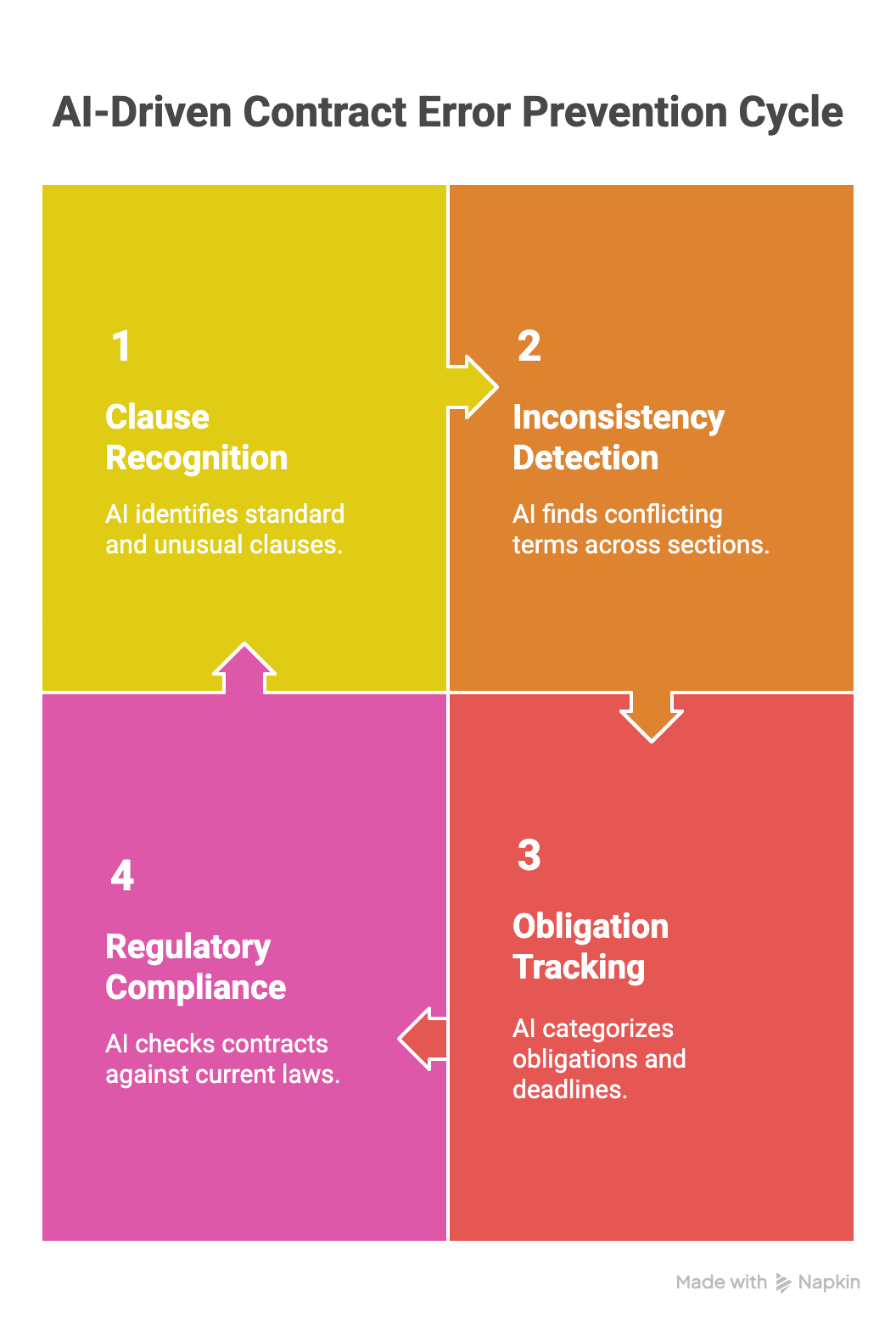
Clause Recognition and Analysis
AI systems trained on millions of legal documents can instantly identify standard clauses, unusual provisions, and potentially problematic language. The technology recognizes patterns such as indemnification clauses, termination rights, liability caps, and payment terms, then flags any deviations from your company’s acceptable standards.
Inconsistency Detection
Contracts often contain conflicting terms across different sections. AI legal document analysis identifies these contradictions that human reviewers might miss during manual review, ensuring internal consistency throughout the document.
Don't let contract mistakes drain your resources and expose your business to unnecessary risks.
Obligation Tracking
AI extracts and categorizes all obligations, deadlines, and deliverables mentioned in contracts, creating an automated tracking system that prevents missed commitments and compliance failures.
Regulatory Compliance Checking
Legal compliance software with AI capabilities continuously updates to reflect changing regulations, automatically checking contracts against current legal requirements in your jurisdiction and industry.
Pro Tip: While AI excels at pattern recognition and data extraction, always have qualified legal counsel review high-stakes or complex agreements. AI should enhance, not replace, human legal expertise, especially for nuanced negotiations or novel contract structures.
Key Benefits for Businesses Using AI Legal Document Analysis
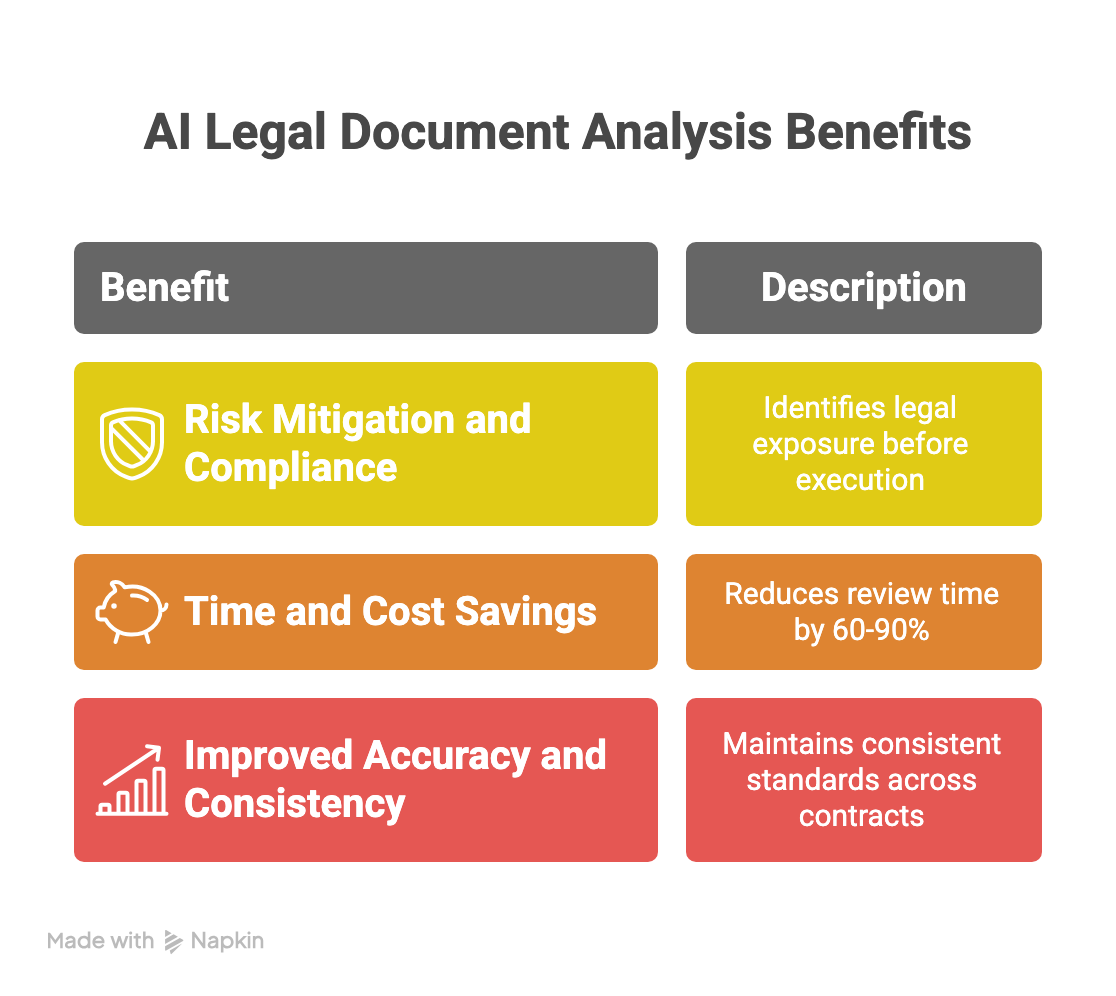
Risk Mitigation and Compliance
The primary advantage of contract review automation is dramatically improved risk management. AI systems identify potential legal exposure before contracts are executed, including:
- Unfavorable indemnification clauses
- Missing force majeure provisions
- Inadequate intellectual property protections
- Non-compliance with data privacy regulations
- Unreasonable liability limitations
By catching these issues early, businesses avoid the costly disputes, litigation, and regulatory penalties that arise from poorly drafted agreements.
Time and Cost Savings
Manual contract review is resource-intensive. A single complex agreement might take legal teams hours or days to thoroughly analyze. AI contract analysis tools reduce this timeline by 60-90%, allowing businesses to:
- Accelerate deal closing timelines
- Reduce legal department overhead costs
- Reallocate attorney time to higher-value strategic work
- Handle greater contract volumes without proportional staff increases
For growing businesses, this scalability is invaluable. AI enables your legal function to expand without linearly increasing headcount.
Improved Accuracy and Consistency
Human reviewers, no matter how skilled, experience fatigue, distraction, and varying interpretations. AI maintains consistent standards across every contract, ensuring that your risk tolerance and business requirements are uniformly applied.
This consistency extends across:
- Different contract types (vendor agreements, customer contracts, employment agreements)
- Multiple reviewers working on parallel deals
- Various jurisdictions with different legal requirements
- Time periods, maintaining standards as your business evolves
Real-World Use Cases
Financial services firms use AI legal document analysis to review loan agreements, ensuring compliance with banking regulations while processing applications 70% faster than traditional methods.
Technology companies leverage contract lifecycle management AI to manage thousands of vendor agreements, automatically flagging when terms deviate from approved standards and when renewal dates approach.
Healthcare organizations rely on legal AI solutions to ensure patient data handling clauses comply with HIPAA and other privacy regulations across all partner agreements.
Real estate developers use automated contract risk detection to review purchase agreements, construction contracts, and leasing documents, identifying potential disputes before they materialize.
Warning: Not all AI legal document analysis tools are created equal. Solutions trained primarily on generic contracts may miss industry-specific risks. Ensure your chosen platform has been trained on documents relevant to your sector and can be customized to your business requirements.
Ready to See AI in Action?
How to Choose the Right AI Legal Document Analysis Tool
Selecting the appropriate legal document review software requires evaluating several critical factors:
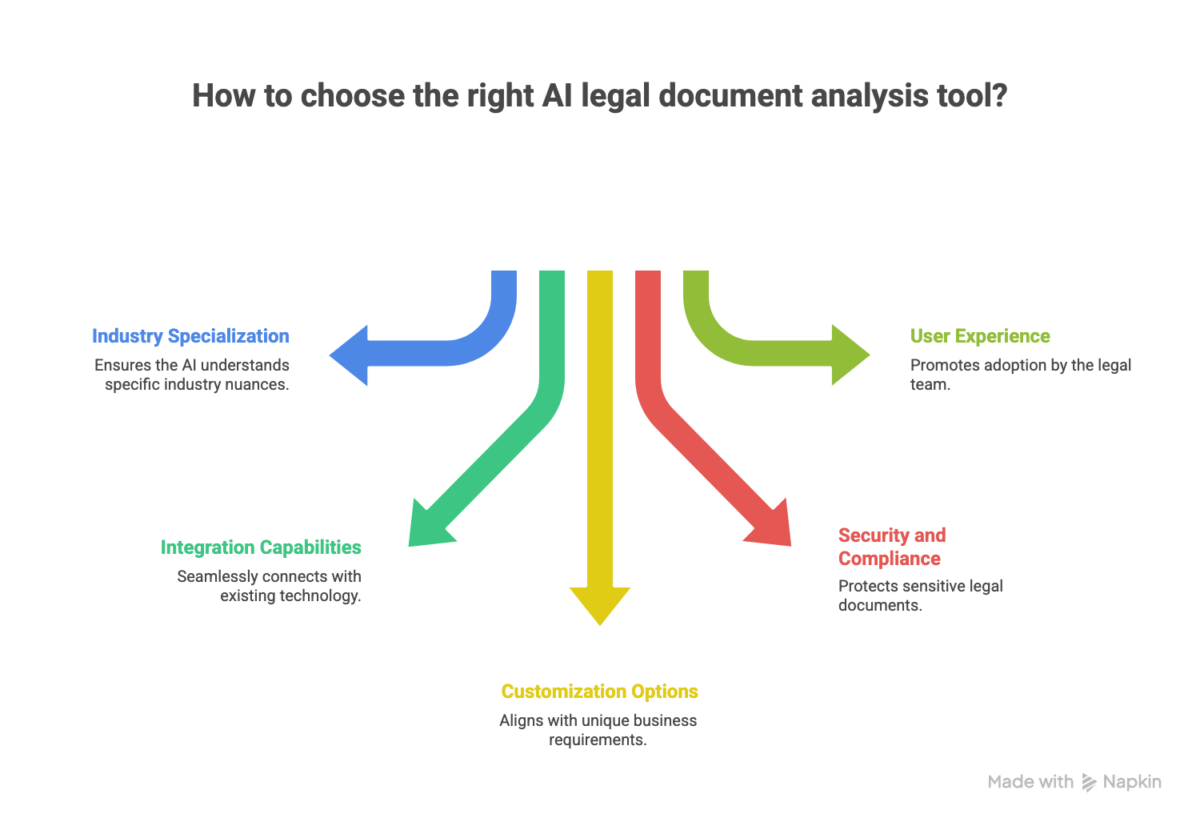
Industry Specialization
Look for AI contract analysis tools with experience in your industry. Healthcare contracts differ significantly from manufacturing agreements, your AI should understand these distinctions.
Integration Capabilities
The best contract mistake prevention systems integrate seamlessly with your existing technology stack, including contract management platforms, document repositories, and enterprise resource planning (ERP) systems.
Customization Options
Your business has unique risk tolerances and requirements. Choose AI-powered legal technology that allows you to define custom playbooks, approval workflows, and risk thresholds aligned with your company policies.
Security and Compliance
Since you’ll be uploading sensitive legal documents, verify that the platform offers:
- End-to-end encryption
- SOC 2 compliance certification
- Data residency options for regulated industries
- Clear data retention and deletion policies
User Experience
Even the most sophisticated AI is useless if your legal team won’t adopt it. Prioritize solutions with intuitive interfaces, clear explanations of flagged issues, and comprehensive training resources.
Build a custom AI legal document analysis solution
Implementation Best Practices for Legal Teams
Successfully deploying reduced legal risks AI technology requires thoughtful change management:
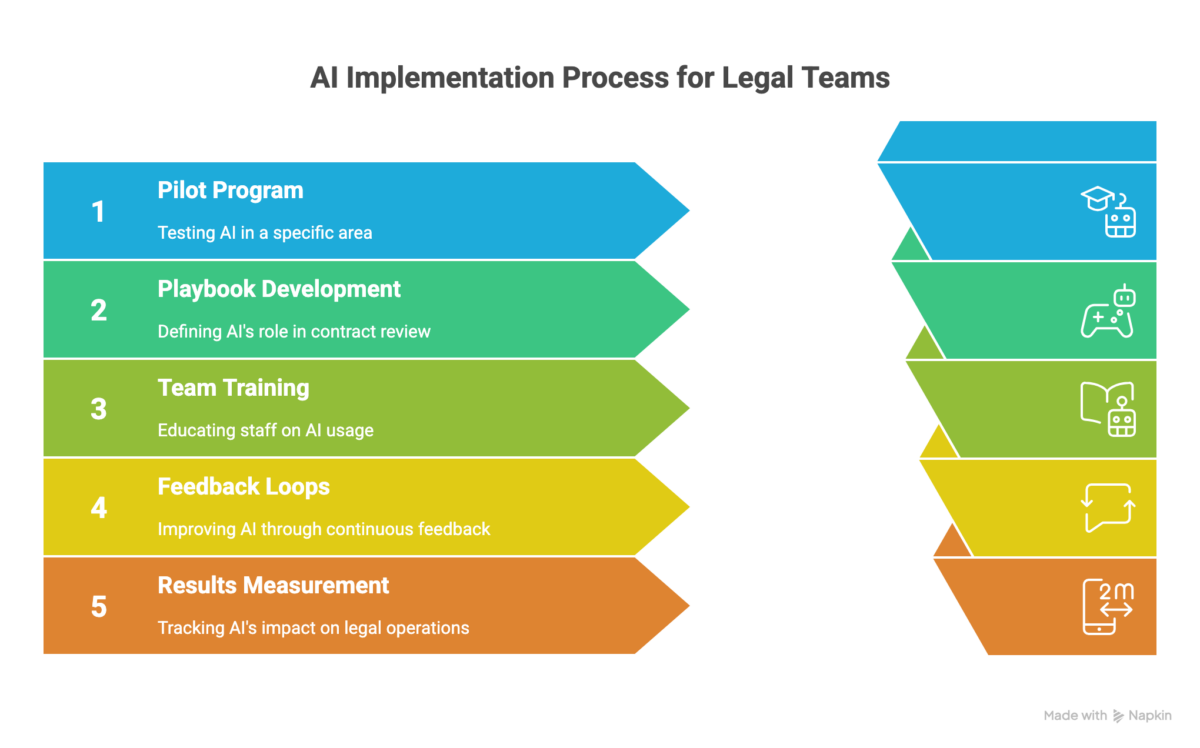
Start with a pilot program: Select a specific contract type or department to test the AI solution before organization-wide rollout. This allows you to refine workflows and demonstrate value.
Develop clear playbooks: Define what contract terms are acceptable, which require escalation, and how AI recommendations should be incorporated into your review process.
Train your team thoroughly: Ensure legal staff understand both the capabilities and limitations of the AI system. They should know when to trust AI recommendations and when to apply human judgment.
Establish feedback loops: Regularly review AI performance, correcting false positives and training the system on your evolving standards. The best business contract management systems improve continuously through use.
Measure results: Track metrics like review time reduction, error rates, contract cycle times, and cost savings to demonstrate ROI and identify further optimization opportunities.
Addressing Common Concerns: Privacy, Security, and Legal Compliance
Many organizations hesitate to adopt AI legal document analysis due to valid concerns about data security and regulatory compliance.
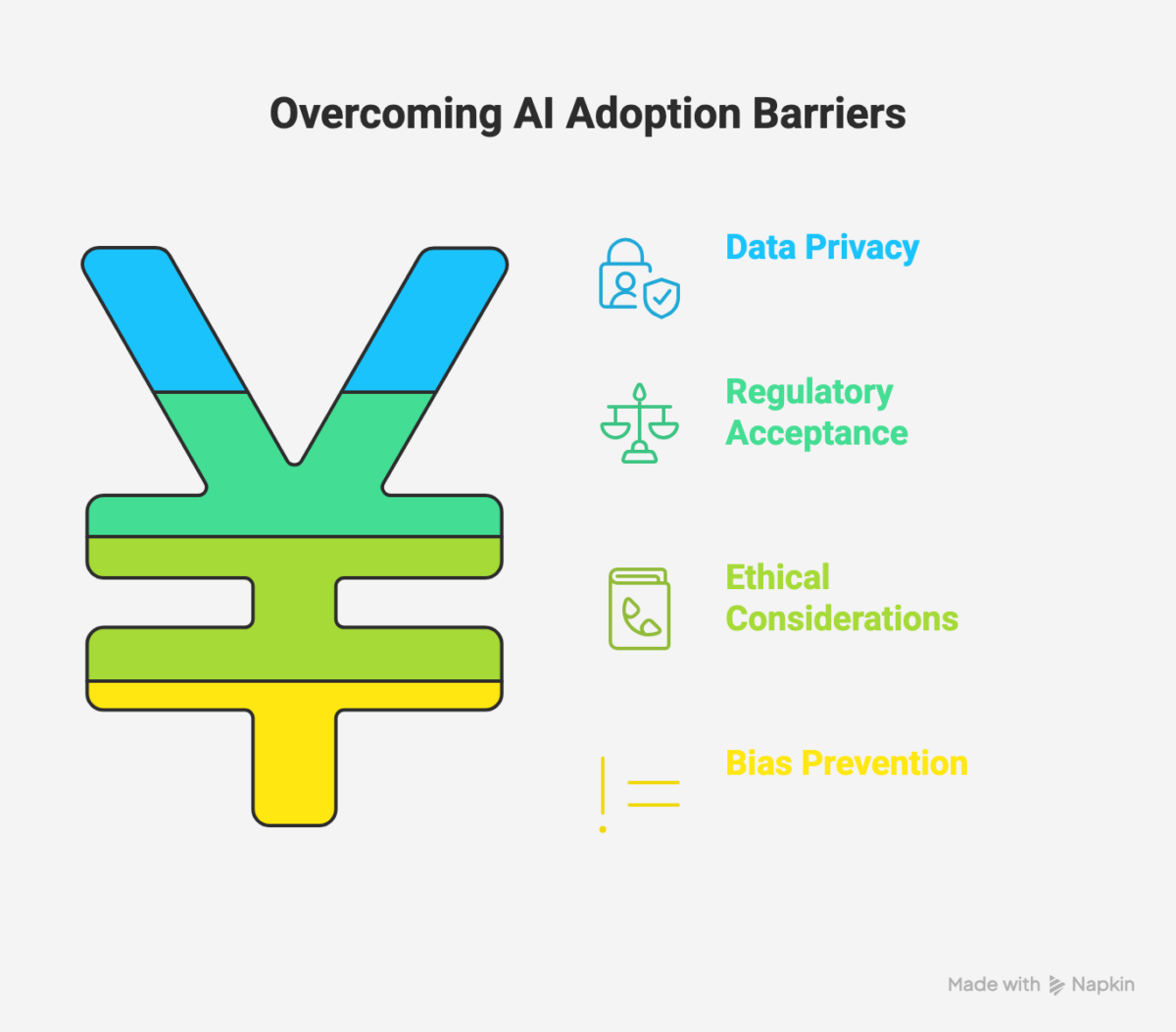
Data Privacy: Reputable legal AI solutions maintain strict data segregation, ensuring your contracts aren’t used to train models that competitors might access. Look for vendors offering private cloud or on-premises deployment options for maximum control.
Regulatory Acceptance: Courts and regulators increasingly recognize AI-assisted legal work as standard practice, provided qualified attorneys maintain oversight and final decision-making authority.
Ethical Considerations: The American Bar Association and other legal bodies have issued guidance on AI use in legal practice, emphasizing the attorney’s duty to understand the tools they employ and maintain competence.
Bias Prevention: Advanced AI systems undergo bias testing to ensure they don’t perpetuate discriminatory patterns. Choose vendors who are transparent about their bias mitigation strategies.
Conclusion
Manual contract review simply cannot keep pace with growing transaction volumes while maintaining the accuracy and consistency required to reduce contract errors.
AI legal document analysis isn’t a luxury for forward-thinking companies, it’s becoming a competitive necessity. Organizations leveraging these tools gain significant advantages: faster deal velocity, improved risk management, reduced legal costs, and the ability to scale operations without proportional increases in legal headcount.
The question isn’t whether your business will adopt AI-powered legal technology, but when, and whether you’ll lead or follow your competitors in this transformation.
FAQ
Will AI legal document analysis replace human lawyers?
No. AI augments legal teams by handling routine review tasks, allowing attorneys to focus on strategic counsel, complex negotiations, and relationship management. Human oversight remains essential, especially for nuanced legal interpretations and business judgment.
How accurate is AI contract analysis compared to manual review?
Studies show AI legal document analysis achieves 85-95% accuracy for standard clause identification and risk flagging, often exceeding tired human reviewers on repetitive tasks. However, accuracy depends on training data quality and proper system configuration. AI excels at consistency and pattern recognition but still requires human validation for complex scenarios.
How does AI handle contracts in multiple languages?
Advanced AI legal document analysis platforms support multilingual contract review, though accuracy varies by language. Major business languages (English, Spanish, German, French, Mandarin) typically have robust support, while less common languages may require specialized solutions or human translation before AI analysis.
Table of contents
- What is AI Legal Document Analysis?
- How AI Identifies and Prevents Contract Errors
- Key Benefits for Businesses Using AI Legal Document Analysis
- Real-World Use Cases
- How to Choose the Right AI Legal Document Analysis Tool
- Implementation Best Practices for Legal Teams
- Addressing Common Concerns
- Conclusion

Related Articles