Greetings! I'm Aneesh Sreedharan, CEO of 2Hats Logic Solutions. At 2Hats Logic Solutions, we are dedicated to providing technical expertise and resolving your concerns in the world of technology. Our blog page serves as a resource where we share insights and experiences, offering valuable perspectives on your queries.
How AI Helps Manufacturers Reduce Costs Through Better Raw Material Planning
Want a Quick Summary?


Table of contents
- What Happens When Manufacturers Order Too Much or Too Little?
- How AI Helps Predict Raw Material Requirements
- How AI Determines When and How Much to Restock
- What Data Does AI Need for Accurate Raw Material Planning?
- How Better Raw Material Planning Reduces Manufacturing Costs
- Can AI Automate Raw Material Purchasing Through ERP Systems?
- How 2Hats Logic Helps Manufacturers
Raw materials are a major part of manufacturing costs. Manufacturers need to maintain enough stock to meet production requirements without tying up too much money in unused materials. However, planning the right quantity at the right time is not always easy. Changes in customer demand, production schedules, supplier lead times, and material availability can make purchasing decisions difficult.
Ordering too much can increase storage costs, tie up working capital, and leave manufacturers with materials they may not need immediately. Ordering too little can delay production, affect delivery schedules, and force businesses to make urgent purchases, sometimes at higher prices. Traditional inventory planning often relies on historical usage, spreadsheets, and manual estimates. These methods can make it difficult to respond quickly when demand or supply conditions change.
This is where AI can help. By analysing historical material consumption, current stock levels, production requirements, and supplier lead times, AI can help manufacturers forecast material needs and make better-informed restocking decisions. The goal is not simply to keep more materials in stock. It is to maintain the right inventory levels to support production while controlling purchasing and storage costs.
What Happens When Manufacturers Order Too Much or Too Little?
Maintaining the right quantity of raw materials is a constant challenge for manufacturers. Ordering more than required increases inventory costs, while ordering less can interrupt production. Both situations affect operational efficiency and profitability.
Overstocking: When Too Much Inventory Increases Costs
When manufacturers purchase more raw materials than their production schedules require, excess stock can create several problems:
- Higher storage costs: More materials require additional warehouse space, handling, and inventory management.
- Tied-up working capital: Money spent on unused materials cannot be easily allocated to other business needs.
- Material wastage: Some raw materials may expire, deteriorate, or become unusable during long storage periods.
- Increased inventory management effort: Teams need to spend more time tracking, counting, and managing excess stock.
Understocking: When Material Shortages Disrupt Production
Insufficient raw materials can affect production schedules and customer commitments. Common challenges include:
- Production delays: Manufacturing activities may stop or slow down while teams wait for missing materials.
- Emergency purchasing: Businesses may need to place urgent orders, sometimes at higher prices or with additional delivery costs.
- Missed delivery deadlines: Material shortages can delay finished products and affect customer commitments.
- Unplanned procurement: Purchasing teams may need to make frequent adjustments to orders instead of following planned procurement schedules.
Finding the Right Balance
Manufacturers need to maintain enough raw materials to meet production requirements without holding unnecessary inventory. This requires accurate demand estimates, visibility into current stock, and a clear understanding of supplier lead times.
Relying only on fixed reorder levels or past consumption may not be sufficient when production requirements and supply conditions change. Better inventory planning helps businesses make purchasing decisions based on actual requirements rather than assumptions.
This is where AI-based forecasting and inventory planning can help manufacturers identify potential shortages, avoid unnecessary purchases, and maintain more balanced stock levels.
How AI Helps Predict Raw Material Requirements
AI helps manufacturers estimate how much raw material they will need by analysing historical inventory data, material consumption patterns, and production requirements. Instead of relying only on past usage or fixed estimates, AI can identify patterns in data and adjust forecasts when business requirements change.
Here are some ways AI supports raw material demand forecasting:
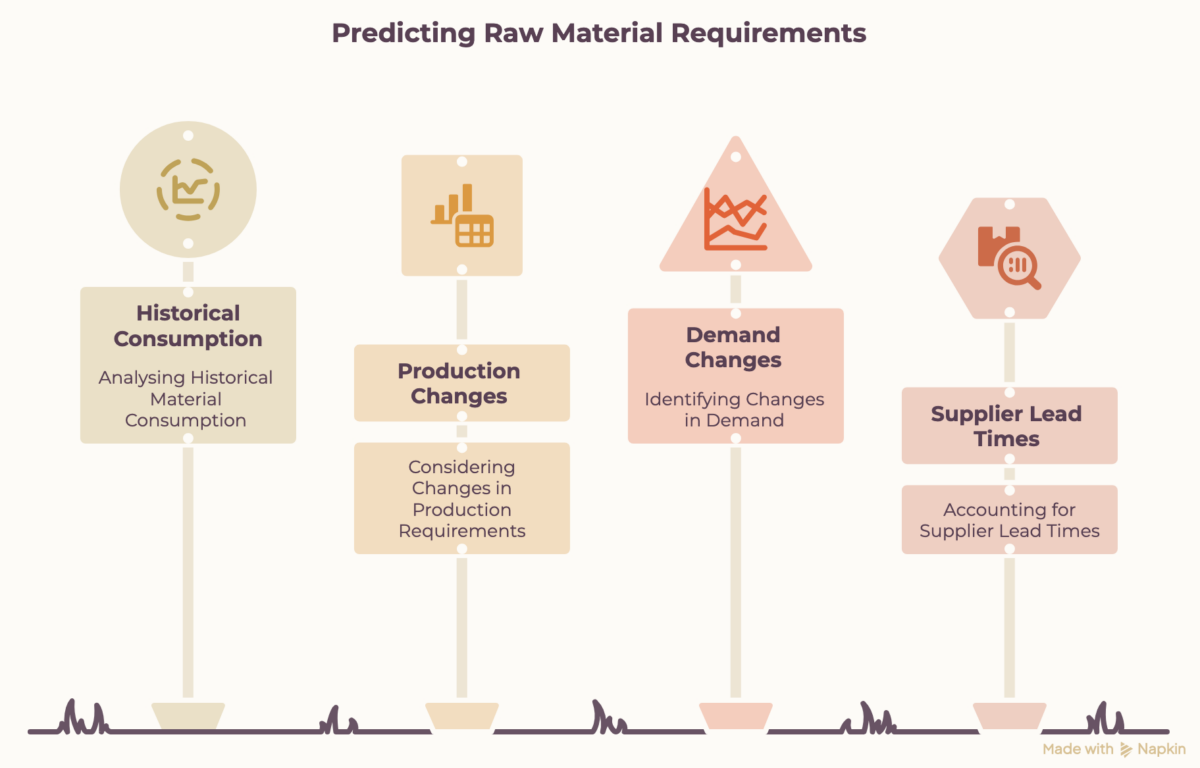
- Analysing Historical Material Consumption
AI analyses historical records to understand how much raw material is used during different production periods. It can identify recurring consumption patterns, seasonal changes, and variations in material requirements.
For example, a furniture manufacturer may notice higher timber consumption during certain production periods. AI can use previous consumption records alongside current production plans to estimate future material requirements.
- Considering Changes in Production Requirements
Raw material requirements depend on what a manufacturer plans to produce. Changes in production volume, product mix, or customer orders can affect the quantity of materials needed.
AI can analyse production schedules, existing orders, and material usage to update forecasts when production requirements change. This helps purchasing teams plan material requirements more accurately.
- Identifying Changes in Demand
Customer demand can fluctuate due to seasonal patterns, market changes and new orders. These changes can directly affect manufacturing requirements.
AI can analyse historical sales data, current orders, and demand trends to help manufacturers anticipate changes in production needs and prepare for corresponding raw material requirements.
- Accounting for Supplier Lead Times
Knowing how much material is required is only part of inventory planning. Manufacturers also need to know when materials will arrive.
AI can analyse supplier lead times and historical delivery records to help estimate when purchase orders should be placed. This helps businesses plan around delivery timelines and reduce the risk of materials arriving too late for production.
By combining these data points, AI can provide manufacturers with more informed estimates of future raw material requirements. These forecasts can then support purchasing decisions and help businesses maintain inventory levels that match their production needs.
How AI Determines When and How Much to Restock
Predicting raw material requirements helps manufacturers understand future demand. The next step is deciding when to place purchase orders and how much material to order.
AI can support these decisions by analysing current inventory levels, forecasted consumption, supplier lead times, and existing purchase orders. This helps manufacturers plan restocking based on actual requirements rather than relying entirely on fixed reorder schedules.
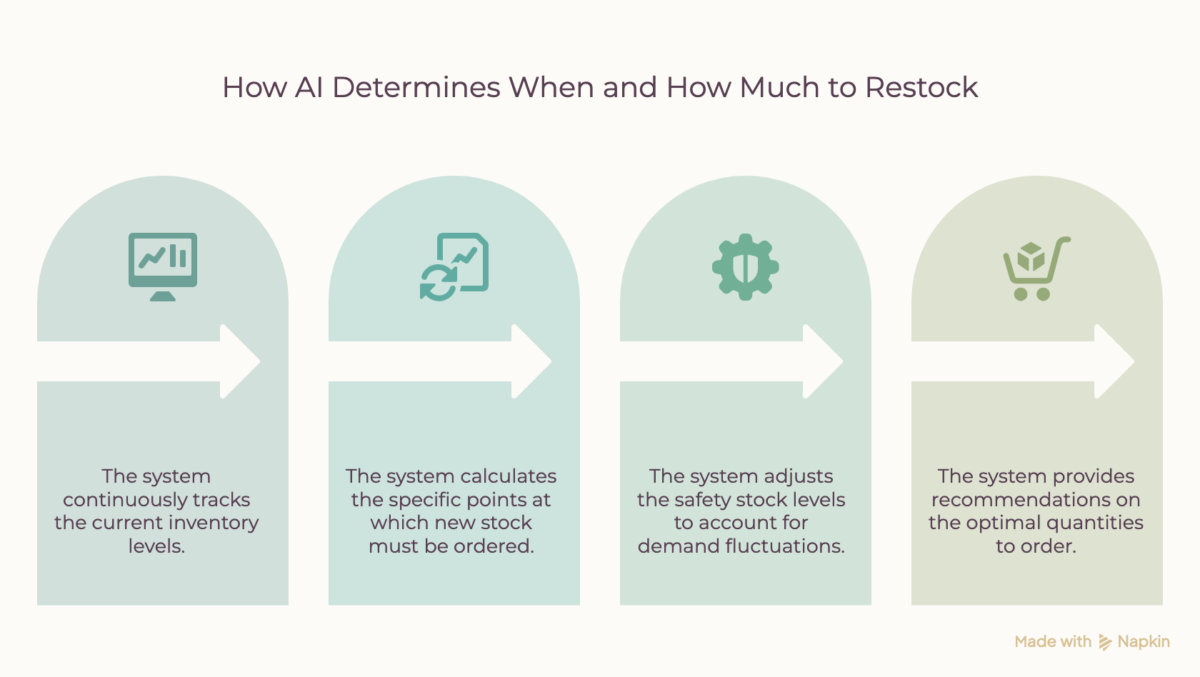
Monitoring Current Stock Levels
AI-based inventory systems can analyse available stock, reserved quantities, and incoming deliveries to provide a clearer picture of inventory levels.
When stock starts approaching the quantity needed for upcoming production, the system can alert purchasing teams or recommend placing a new order.
This helps manufacturers identify potential shortages before they affect production.
Calculating Reorder Points
A reorder point indicates when a business should place a new order to avoid running out of materials before the next delivery arrives. AI can help estimate reorder points by considering factors such as:
- Average raw material consumption.
- Supplier delivery lead times.
- Forecasted production requirements.
- Existing stock and incoming orders.
- Changes in demand.
Unlike fixed reorder levels, AI-based recommendations can be updated when consumption patterns or supplier delivery timelines change.
Adjusting Safety Stock Levels
Safety stock is the additional inventory a manufacturer keeps to manage unexpected demand increases or supplier delays. Keeping too much safety stock increases storage and inventory costs. Keeping too little increases the risk of production interruptions.
AI can analyse historical demand variations, supplier delivery performance and material consumption patterns to help businesses determine appropriate safety stock levels.
Recommending Order Quantities
Once the system identifies when materials need to be restocked, it can also recommend how much to purchase. These recommendations can consider forecasted material requirements, available inventory, minimum order quantities, supplier constraints and planned production schedules.
For example, if a manufacturer expects higher production next month, AI can identify the additional raw materials required and recommend an order quantity that accounts for existing stock and expected deliveries.
By combining these decisions, AI helps manufacturers move towards more planned purchasing. Instead of ordering materials based only on current stock levels, purchasing teams can consider future production requirements and supplier timelines before placing orders.
What Data Does AI Need for Accurate Raw Material Planning?
AI-based raw material planning depends on having accurate and relevant business data. The more reliable the input data, the better the system can estimate material requirements and recommend restocking decisions.
Some of the key data sources include:
- Historical material consumption: Records showing how much raw material was used across previous production cycles help AI identify consumption patterns.
- Current inventory levels: Available stock, reserved materials and incoming deliveries help determine how much material is actually available.
- Production schedules: Planned production volumes and manufacturing timelines help estimate the quantity of raw materials required.
- Sales orders and demand data: Existing customer orders and historical sales trends help identify changes that may affect production requirements.
- Supplier information: Supplier lead times, delivery history, minimum order quantities and pricing help businesses plan purchases around supply conditions.
These data sources often exist across ERP systems, inventory management software, production planning tools and spreadsheets.
Connecting relevant data sources gives AI a more complete view of material requirements. It can then use this information to update forecasts, identify potential shortages and recommend when purchasing teams should place new orders.
However, inaccurate stock records, outdated supplier information or incomplete production data can affect forecast quality. Maintaining reliable and updated data is therefore essential for effective AI-based inventory planning.
How Better Raw Material Planning Reduces Manufacturing Costs
Accurate raw material planning helps manufacturers control purchasing, storage and production costs. By using AI to forecast material requirements and recommend restocking quantities, businesses can make better purchasing decisions and avoid unnecessary inventory expenses.
Here are some ways better planning can reduce manufacturing costs.
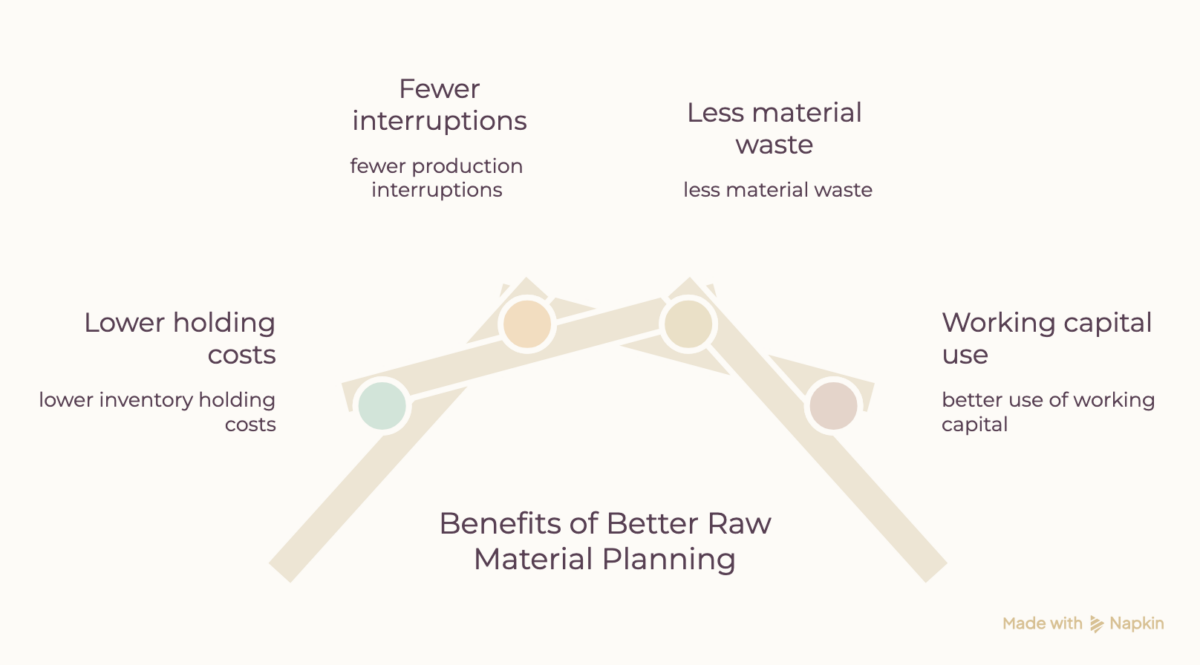
- Lower Inventory Holding Costs
Maintaining excess raw materials increases expenses related to warehouse space, handling, insurance and inventory management.
AI-based forecasting helps manufacturers estimate upcoming material requirements and avoid purchasing more than necessary. This allows businesses to manage stock levels while reducing the costs associated with holding excess inventory.
- Fewer Production Interruptions
When essential raw materials are unavailable, production schedules can be disrupted. This can lead to idle machinery, underutilised labour and delayed customer orders.
By identifying potential shortages earlier, AI helps purchasing teams plan orders around production requirements and supplier delivery timelines. This supports better production continuity and reduces the need for last-minute purchasing.
- Less Material Waste
Some raw materials have limited shelf lives or can deteriorate during storage. Holding more materials than required increases the risk of unused or expired inventory.
AI can help manufacturers estimate material consumption more accurately and align purchasing quantities with planned production. This helps reduce the likelihood of materials remaining unused for extended periods.
- Better Use of Working Capital
Excessive raw material purchases tie up money that could otherwise support production, equipment maintenance or other business operations.
By improving demand forecasts and restocking decisions, manufacturers can avoid unnecessary purchases and allocate their working capital more efficiently.
Can AI Automate Raw Material Purchasing Through ERP Systems?
Yes. AI can support raw material purchasing by connecting inventory forecasts and restocking recommendations with ERP systems. This helps manufacturers move from identifying material requirements to preparing purchase orders with less manual effort.
When AI inventory planning is integrated with an ERP system, it can use inventory records, production requirements, supplier details and purchasing data to support the procurement process.
Here is how the process can work:
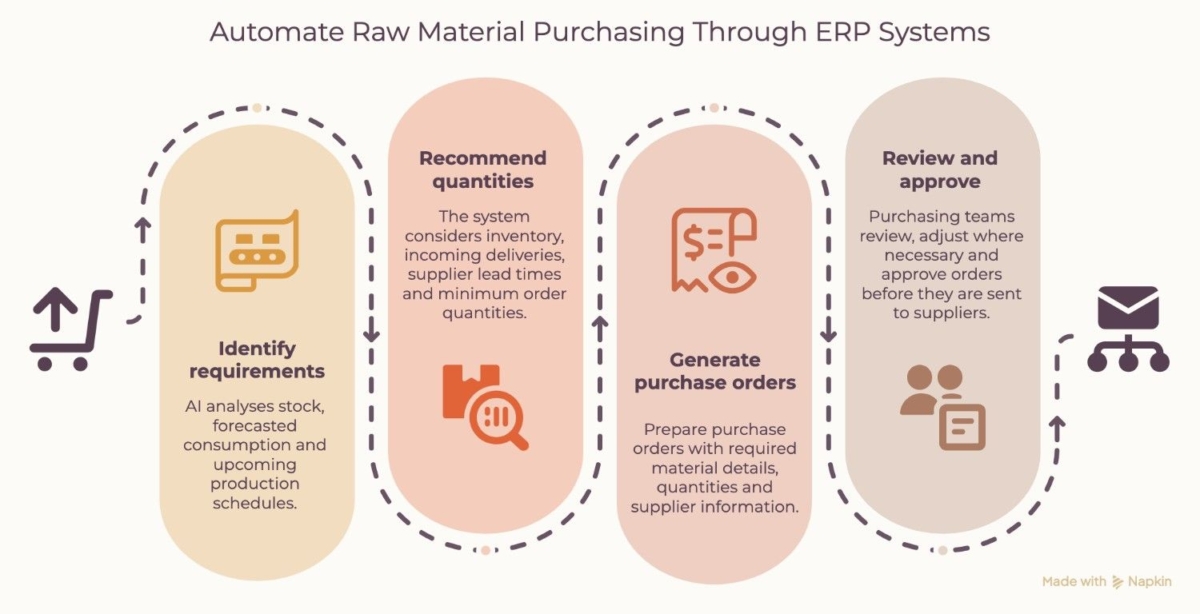
- Identify material requirements: AI analyses current stock, forecasted consumption and upcoming production schedules to identify materials that need restocking.
- Recommend purchase quantities: The system considers available inventory, incoming deliveries, supplier lead times and minimum order quantities to recommend how much to purchase.
- Generate purchase orders: Based on predefined business rules, the system can prepare purchase orders with the required material details, quantities and supplier information.
- Review and approve orders: Purchasing teams can review the generated orders, make adjustments where necessary and approve them before they are sent to suppliers.
ERP integration also helps keep purchasing and inventory records updated as orders are processed and deliveries are received.
How 2Hats Logic Helps Manufacturers
At 2Hats Logic, we help businesses implement AI-based inventory management and automation solutions that connect with their existing business systems.
Our solutions can support inventory forecasting, stock monitoring and purchasing workflows by bringing together relevant business data and reducing manual work involved in inventory planning and procurement.
By connecting AI capabilities with ERP systems, manufacturers can improve visibility into raw material requirements, make informed restocking decisions and automate parts of the purchasing process while keeping their teams involved in important approvals.
Looking to automate your process
Want a Quick Summary?
Table of contents
- What Happens When Manufacturers Order Too Much or Too Little?
- How AI Helps Predict Raw Material Requirements
- How AI Determines When and How Much to Restock
- What Data Does AI Need for Accurate Raw Material Planning?
- How Better Raw Material Planning Reduces Manufacturing Costs
- Can AI Automate Raw Material Purchasing Through ERP Systems?
- How 2Hats Logic Helps Manufacturers

Related Articles