

Greetings! I'm Aneesh Sreedharan, CEO of 2Hats Logic Solutions. At 2Hats Logic Solutions, we are dedicated to providing technical expertise and resolving your concerns in the world of technology. Our blog page serves as a resource where we share insights and experiences, offering valuable perspectives on your queries.
Insurance claim fraud is costing the industry billions of dollars every year.
From staged car accidents to exaggerated medical bills and fake property damage claims, insurance fraud detection has become one of the biggest challenges facing insurers today. Traditional methods of detecting fraud, such as manual reviews, rule-based systems, and random audits, are often slow, expensive, and ineffective against increasingly sophisticated fraudsters.
With advanced capabilities in pattern recognition, data analysis, and predictive modeling, AI is revolutionizing how insurance companies identify and prevent fraudulent claims. But can AI truly reduce insurance claim fraud? Let’s explore.
What is AI and How Does It Work in Fraud Detection?
Artificial Intelligence (AI) refers to computer systems that can perform tasks typically requiring human intelligence. In the context of insurance fraud prevention, AI analyzes vast amounts of data to identify suspicious patterns that humans might miss.
How AI Works in Fraud Detection
AI systems learn from historical claims data, both legitimate and fraudulent. They identify patterns, correlations, and anomalies that indicate potential fraud. Unlike traditional rule-based systems that follow predetermined criteria, machine learning in insurance adapts and improves over time as it processes more data.
Think of it this way: If a traditional fraud detection system is like a security guard following a checklist, AI is like an experienced detective who learns from every case and gets better at spotting suspicious behavior.
Key AI capabilities for fraud detection include:
- Analyzing millions of claims in seconds
- Identifying hidden connections between seemingly unrelated claims
- Learning from new fraud patterns automatically
- Providing risk scores for each claim
- Reducing human bias in fraud investigations
Want to Implement AI Fraud Detection for Your Insurance Business?
Key AI Technologies Used in Insurance Fraud Reduction
Several AI fraud prevention tools work together to create comprehensive fraud detection systems:
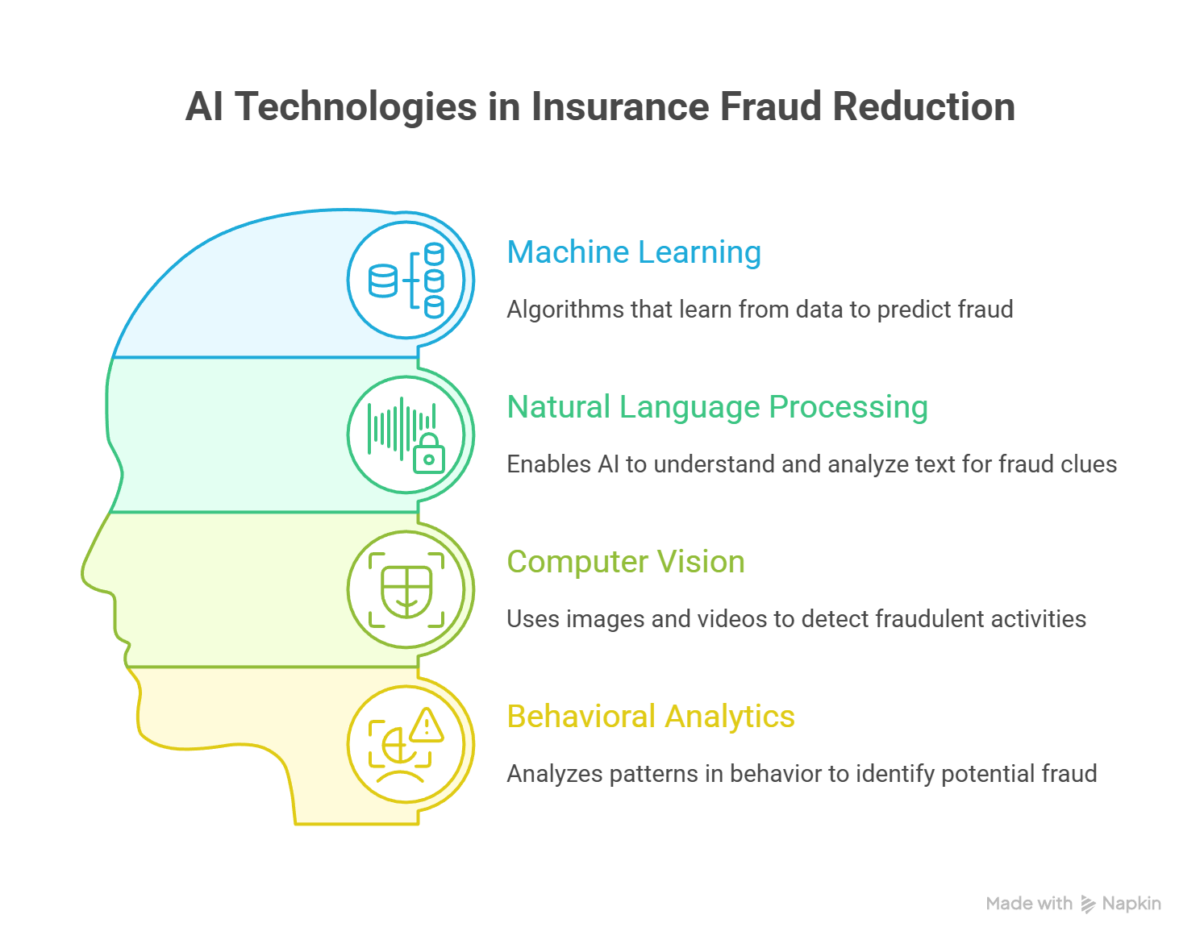
Machine Learning (ML)
Machine learning algorithms analyze historical claims data to identify patterns associated with fraud. These systems can flag claims that deviate from normal patterns, even if the fraud tactics are new.
Example: An ML model might notice that claims filed on Friday evenings from a specific geographic area have a higher fraud rate, prompting additional scrutiny.
Natural Language Processing (NLP)
NLP helps AI understand and analyze text in claim descriptions, medical reports, and communication logs. This technology can detect inconsistencies in stories, suspicious language patterns, or exaggerated descriptions.
Example: NLP can identify when a claimant’s written statement contradicts their verbal statement or when medical terminology is used incorrectly, suggesting a fabricated injury.
Computer Vision
This technology analyzes images and videos submitted with claims. Claims processing automation using computer vision can detect photo manipulation, identify whether damage is consistent with the reported incident, or spot staged accidents.
Example: Computer vision can determine if photos of vehicle damage were taken at different times or locations, or if damage patterns match the accident description.
Behavioral Analytics
By analyzing claimant behavior, such as claim submission timing, communication patterns, and historical claim frequency, AI can identify suspicious behavior that might indicate insurance claim fraud reduction opportunities.
Example: A claimant who files multiple small claims just below investigation thresholds might be flagged by behavioral analytics.
WARNING: While AI is powerful, it’s not infallible. False positives can occur, which is why human oversight remains essential in fraud investigations.
How AI Detects and Prevents Insurance Claim Fraud
The AI fraud detection process typically follows these stages:
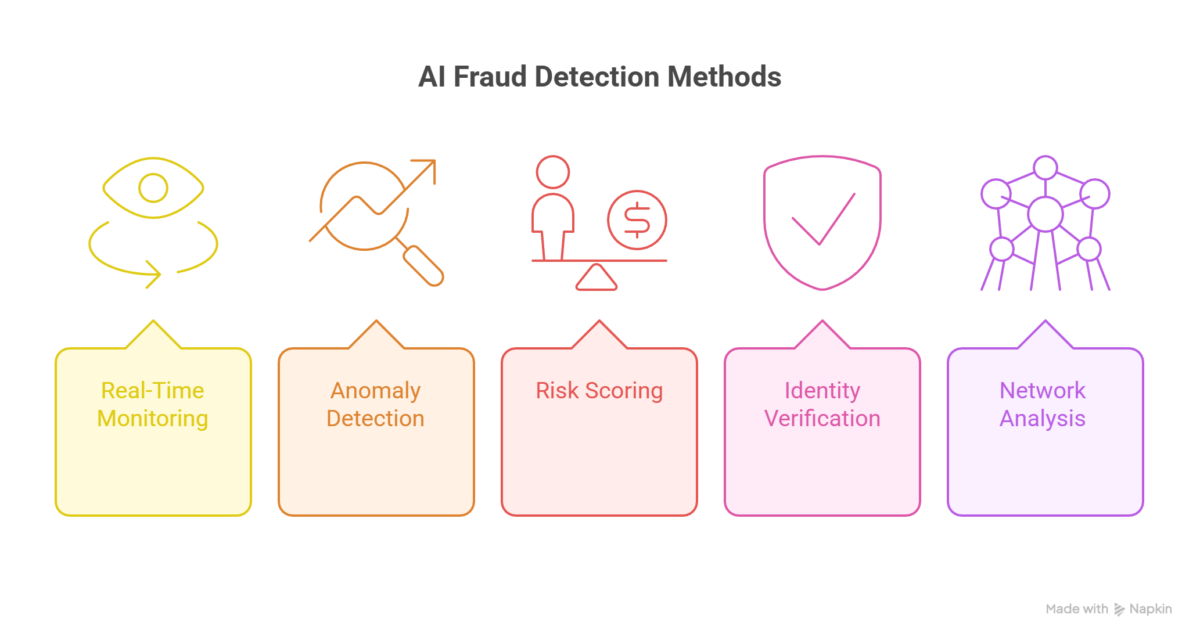
Real-Time Monitoring
AI systems monitor claims as they’re submitted, providing instant analysis. This allows insurers to flag suspicious claims immediately rather than discovering fraud weeks or months later.
Anomaly Detection
Predictive analytics insurance fraud systems identify claims that deviate from expected patterns. This includes unusual claim amounts, timing, or circumstances that don’t align with typical legitimate claims.
Risk Scoring
Every claim receives an automated risk score indicating fraud likelihood. High-risk claims receive priority investigation, while low-risk claims can be fast-tracked for payment, improving customer satisfaction.
Identity Verification
AI cross-references claimant information across multiple databases to verify identities and detect duplicate claims, false identities, or organized fraud rings.
Network Analysis
AI maps connections between claimants, providers, and beneficiaries to uncover fraud networks that traditional methods would miss. This is particularly effective against organized insurance fraud.
PRO TIP: The best fraud detection systems combine AI capabilities with human expertise. AI flags suspicious claims, but experienced investigators make final determinations.
Real-World Use Case
Health Insurance: Detecting Medical Billing Fraud
A major U.S. health insurer implemented AI in health insurance fraud detection and reduced fraudulent claims by 40% within the first year. Their system identified:
- Duplicate billing for the same procedures
- Services billed but never rendered
- Upcoding (billing for more expensive procedures than performed)
- Excessive or unnecessary treatments
Result: $200 million in annual savings and faster legitimate claim processing.
Auto Insurance: Preventing Staged Accidents
A European auto insurer used insurtech fraud solutions with computer vision and machine learning to combat staged accidents. Their AI system analyzed accident photos, damage patterns, and crash dynamics to identify inconsistencies.
Result: 35% reduction in fraudulent auto claims and 50% faster claim settlement for legitimate accidents.
Benefits of Using AI for Insurance Fraud Detection
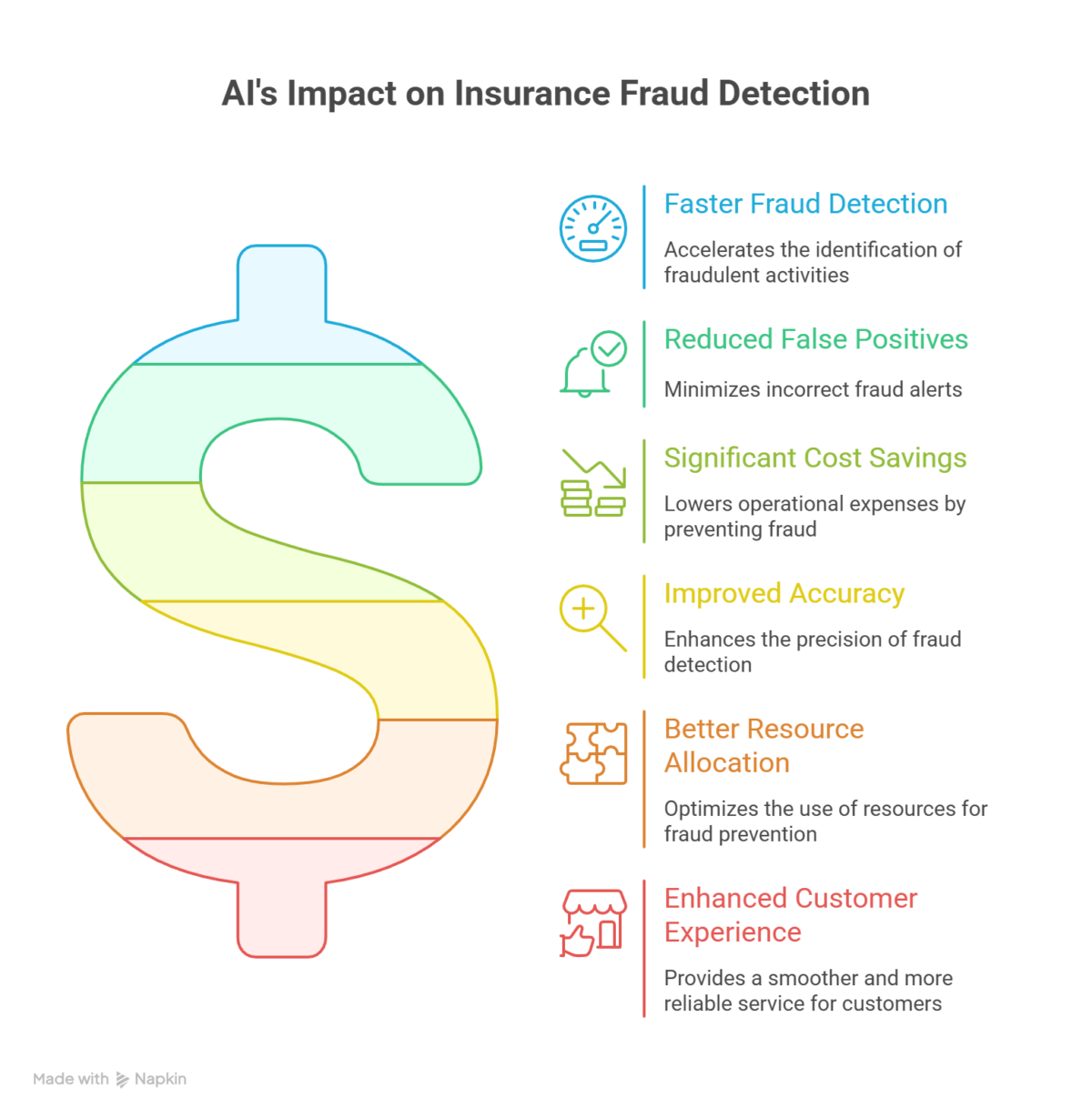
Faster Fraud Detection
Traditional fraud investigations can take weeks or months. Fraud detection algorithms work in real-time, flagging suspicious claims within seconds of submission.
Reduced False Positives
AI’s sophisticated analysis reduces the number of legitimate claims incorrectly flagged as fraudulent, improving customer experience and reducing investigation costs.
Significant Cost Savings
By preventing fraudulent payouts and reducing investigation expenses, AI delivers substantial ROI. Industry estimates suggest AI can reduce fraud-related costs by 30-50%.
Improved Accuracy
AI analyzes far more data points than human investigators can consider, leading to more accurate fraud detection. Machine learning models continuously improve, staying ahead of evolving fraud tactics.
Better Resource Allocation
With AI handling initial screening, fraud investigators can focus on high-risk cases requiring human judgment, making fraud teams more efficient.
Enhanced Customer Experience
Legitimate claimants benefit from faster claim processing when AI quickly validates their claims, while fraudsters face increased detection rates.
PRO TIP: When evaluating AI fraud detection solutions, look for systems with transparent decision-making processes that can explain why claims were flagged.
Our AI Team Builds Custom Fraud Detection Solutions
Challenges and Ethical Considerations in AI Fraud Detection
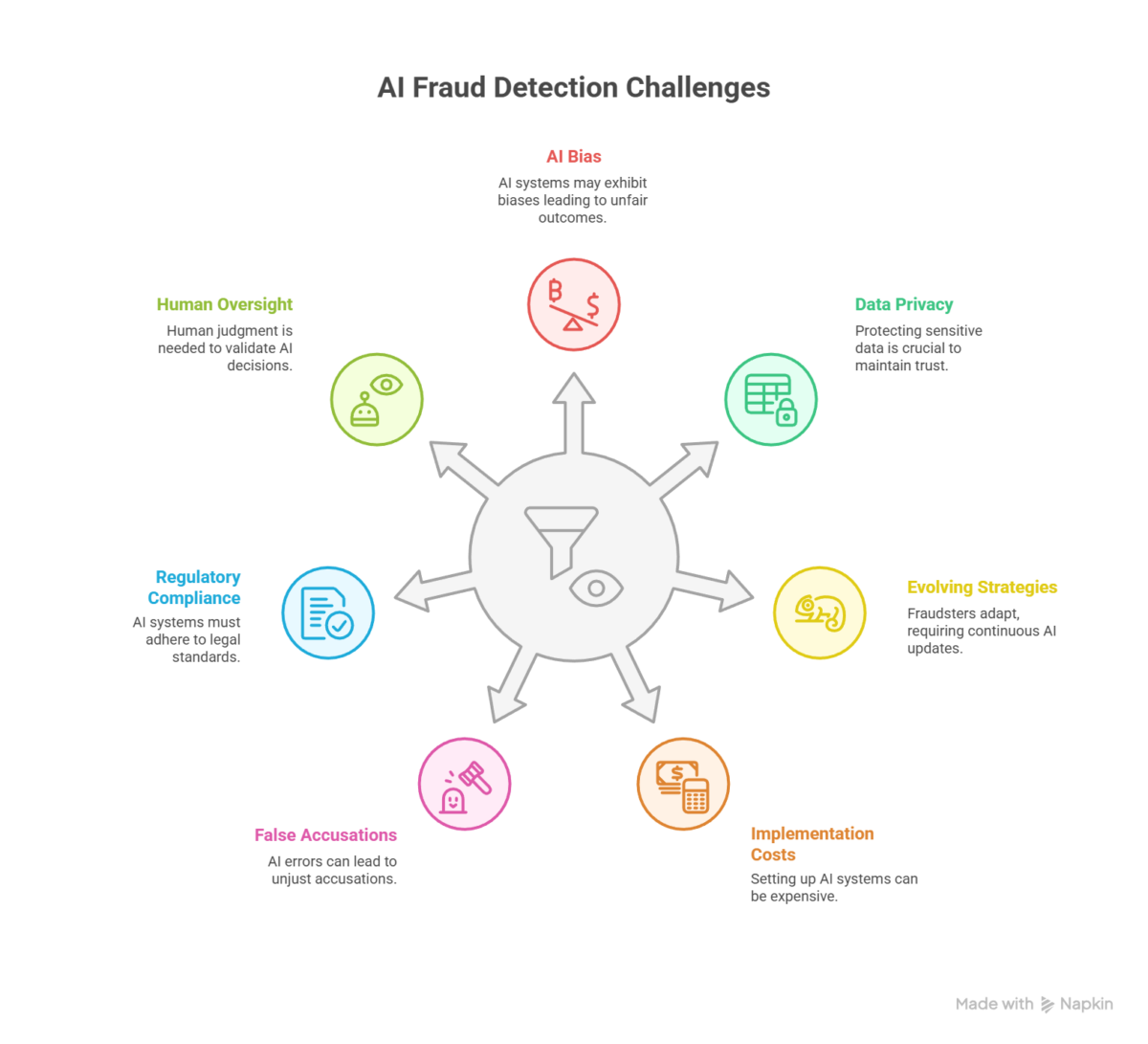
Data Privacy Concerns
Insurance fraud detection technology requires access to sensitive personal information. Insurers must balance fraud prevention with privacy protection and comply with regulations like GDPR and CCPA.
Consideration: Implement robust data security measures and be transparent about how data is used.
AI Bias and Fairness
AI systems can inadvertently perpetuate biases present in training data, potentially flagging certain demographic groups unfairly. This raises serious ethical and legal concerns.
Consideration: Regularly audit AI models for bias and ensure diverse training data sets.
Evolving Fraud Strategies
Fraudsters adapt their tactics to evade detection. AI systems must continuously update to recognize new fraud patterns, requiring ongoing investment and development.
Consideration: Treat AI fraud detection as an evolving capability, not a one-time implementation.
Implementation Costs
Deploying sophisticated AI systems requires significant upfront investment in technology, data infrastructure, and talent.
Consideration: Start with pilot programs in high-fraud areas to demonstrate ROI before full-scale deployment.
Avoiding False Accusations
No system is perfect. False fraud accusations can damage customer relationships and expose insurers to legal liability.
Consideration: Always include human review for high-stakes fraud determinations.
Regulatory Compliance
Insurance is heavily regulated, and AI decision-making must comply with industry regulations and be explainable to regulators.
Consideration: Choose AI solutions designed specifically for insurance compliance requirements.
Human Oversight Requirements
AI should augment, not replace, human judgment. Complex fraud cases require investigative expertise that AI cannot fully replicate.
WARNING: Over-reliance on AI without human oversight can lead to wrongful claim denials, damaged reputation, and regulatory penalties.
Future Trends
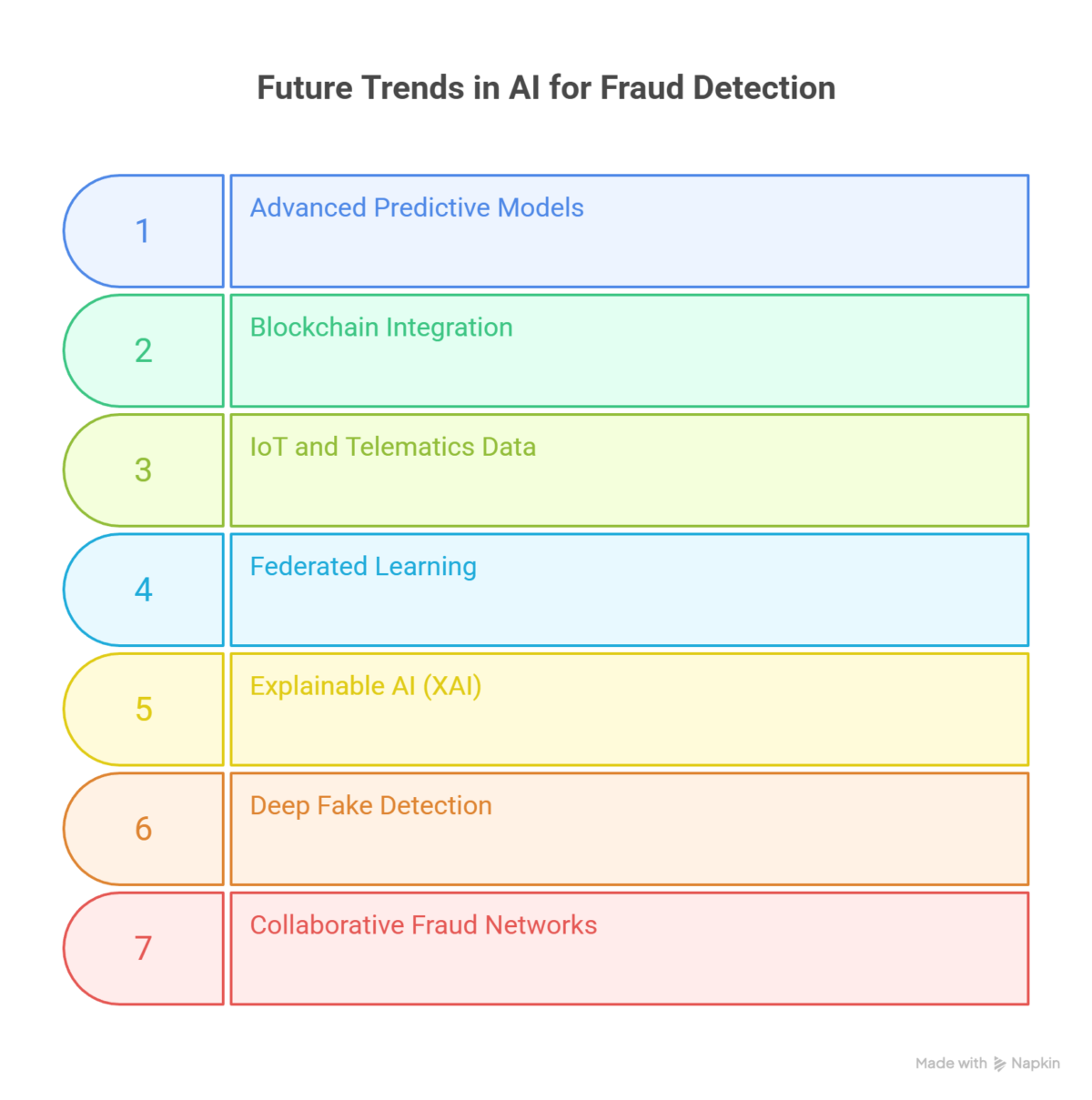
Advanced Predictive Models
Next-generation AI will predict fraud before it happens by identifying high-risk policyholders and suspicious patterns during the application process itself.
Blockchain Integration
Combining AI with blockchain technology will create immutable claim records, making fraud significantly harder to execute and easier to detect.
IoT and Telematics Data
Internet of Things devices and vehicle telematics will provide AI with real-time data, enabling more accurate fraud detection. For example, car sensors can verify whether an accident actually occurred as described.
Federated Learning
This emerging technology allows AI models to learn from data across multiple insurers without sharing sensitive information, improving fraud detection while preserving privacy.
Explainable AI (XAI)
Future AI systems will better explain their fraud determinations, making it easier for investigators to understand and validate AI recommendations—and easier to comply with regulatory requirements.
Deep Fake Detection
As fraudsters potentially use AI-generated fake images and videos, insurers will deploy counter-AI technology specifically designed to detect such sophisticated forgeries.
Collaborative Fraud Networks
Industry-wide AI platforms will enable insurers to share fraud intelligence and identify cross-company fraud patterns while maintaining competitive separation.
Conclusion
Can AI reduce insurance claim fraud? The evidence is clear: yes, significantly.
AI insurance fraud detection is transforming the insurance industry by:
- Detecting fraud faster and more accurately than ever before
- Saving billions of dollars annually in prevented fraudulent payouts
- Improving experiences for honest policyholders through faster claim processing
- Enabling fraud investigators to focus on complex cases requiring human expertise
- Continuously evolving to stay ahead of sophisticated fraud tactics
However, AI is a tool, not a magic solution. Successful fraud reduction requires:
- Combining AI capabilities with human oversight
- Addressing ethical concerns around bias and privacy
- Continuous investment in technology and talent
- Industry collaboration and shared learning
As AI technology continues advancing, its role in insurance fraud prevention will only grow. Insurers who embrace these tools while maintaining ethical standards will gain significant competitive advantages, better protecting their businesses, legitimate customers, and the broader insurance ecosystem.
The future of fraud detection is here, and it’s powered by artificial intelligence.
Don't let fraudsters cost you millions. Our team builds custom AI fraud detection systems
FAQ
How effective is AI at detecting insurance fraud?
AI can reduce fraudulent claims by 30-50%, with some insurers reporting 40% reduction in the first year. It detects fraud faster (real-time vs. weeks) and more accurately than traditional methods.
Can AI completely replace human fraud investigators?
No. AI should augment, not replace human judgment. The best systems combine AI flagging with experienced investigators making final determinations. AI handles initial screening; humans handle complex cases.
What types of insurance fraud can AI detect?
AI can detect a wide range of insurance fraud by analysing patterns, anomalies, and behavioural data in real time. It helps identify duplicate claims, identity fraud, exaggerated losses, staged accidents, upcoding (billing for more expensive procedures than those actually performed), insider fraud, and AI-generated fake images or documents. By flagging suspicious activity early, AI enables insurers to investigate high-risk claims more efficiently and reduce fraudulent payouts.
How much does AI fraud detection implementation cost?
Upfront investment includes technology, data infrastructure, and talent. Start with pilot programs in high-fraud areas to demonstrate ROI before full deployment. Industry ROI is 30-50% fraud cost reduction.
Does AI reduce false positives in fraud detection?
Yes. AI's sophisticated analysis reduces legitimate claims incorrectly flagged as fraudulent by learning from historical outcomes and refining fraud indicators. Advanced models differentiate between genuine claim variations and actual fraud signals.
How does AI handle data privacy concerns?
Implement robust data security measures and be transparent about data usage. Consider federated learning (emerging technology) that allows AI to learn across insurers without sharing sensitive information.
Can AI detect new fraud tactics it hasn't seen before?
Yes. Machine learning models adapt and improve over time, identifying suspicious patterns even when fraud tactics are new. They learn from historical data and continuously update.
Table of contents
- What is AI and How Does It Work in Fraud Detection?
- Key AI Technologies Used in Insurance Fraud Reduction
- How AI Detects and Prevents Insurance Claim Fraud
- Real-World Use Case
- Benefits of Using AI for Insurance Fraud Detection
- Challenges and Ethical Considerations in AI Fraud Detection
- Future Trends
- Conclusion


Related Articles